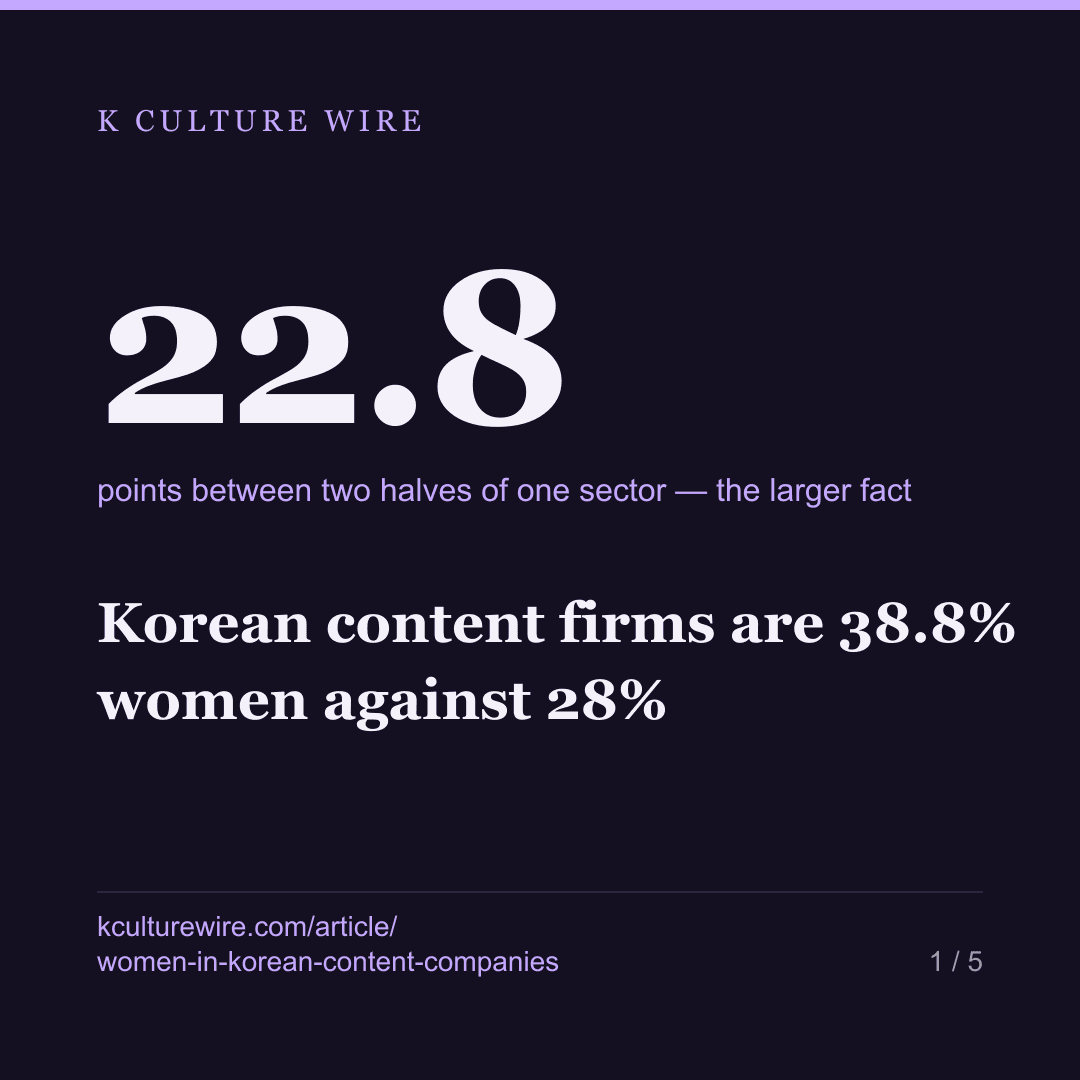
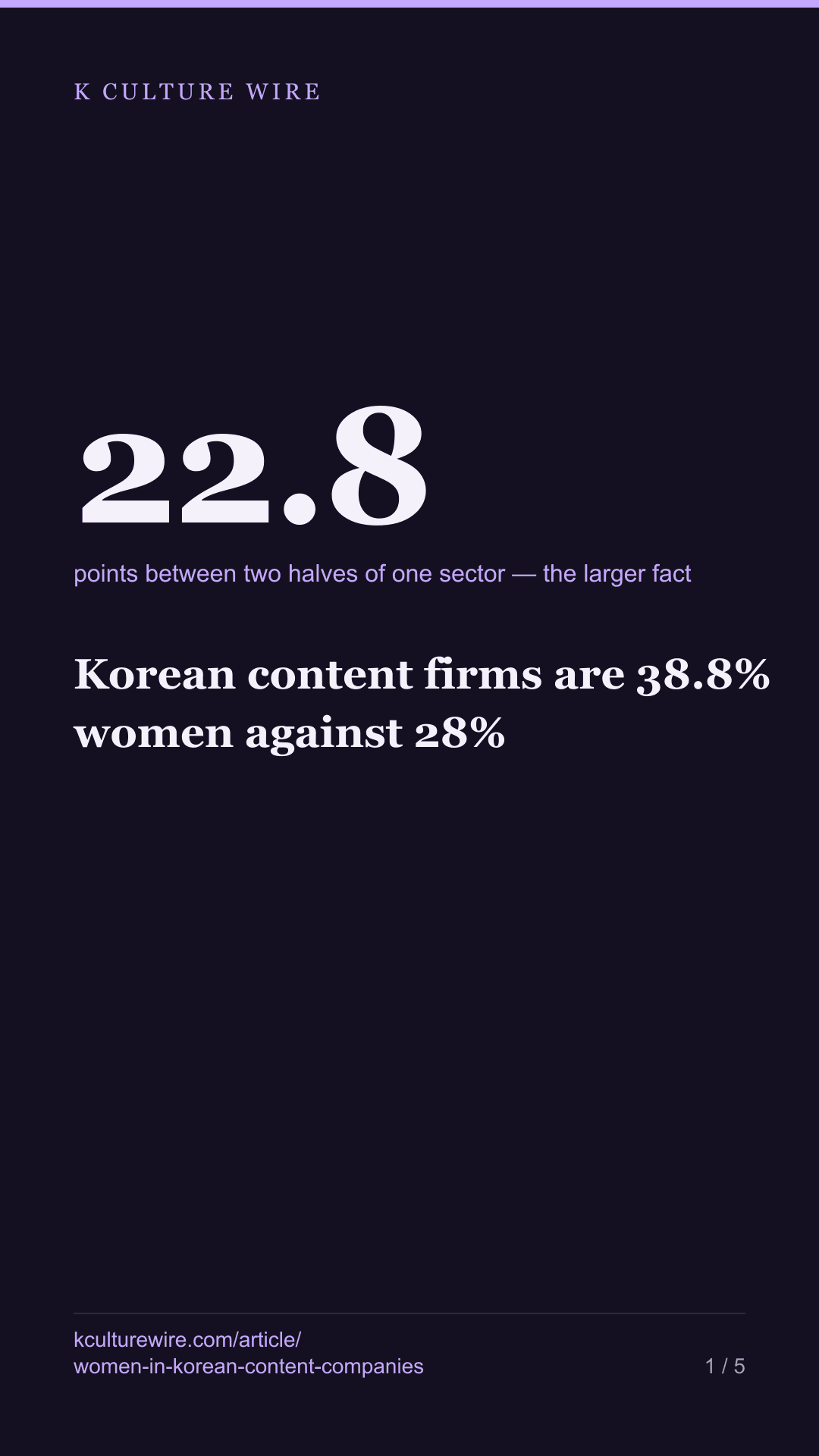
Korean content firms are 38.8% women against 28%
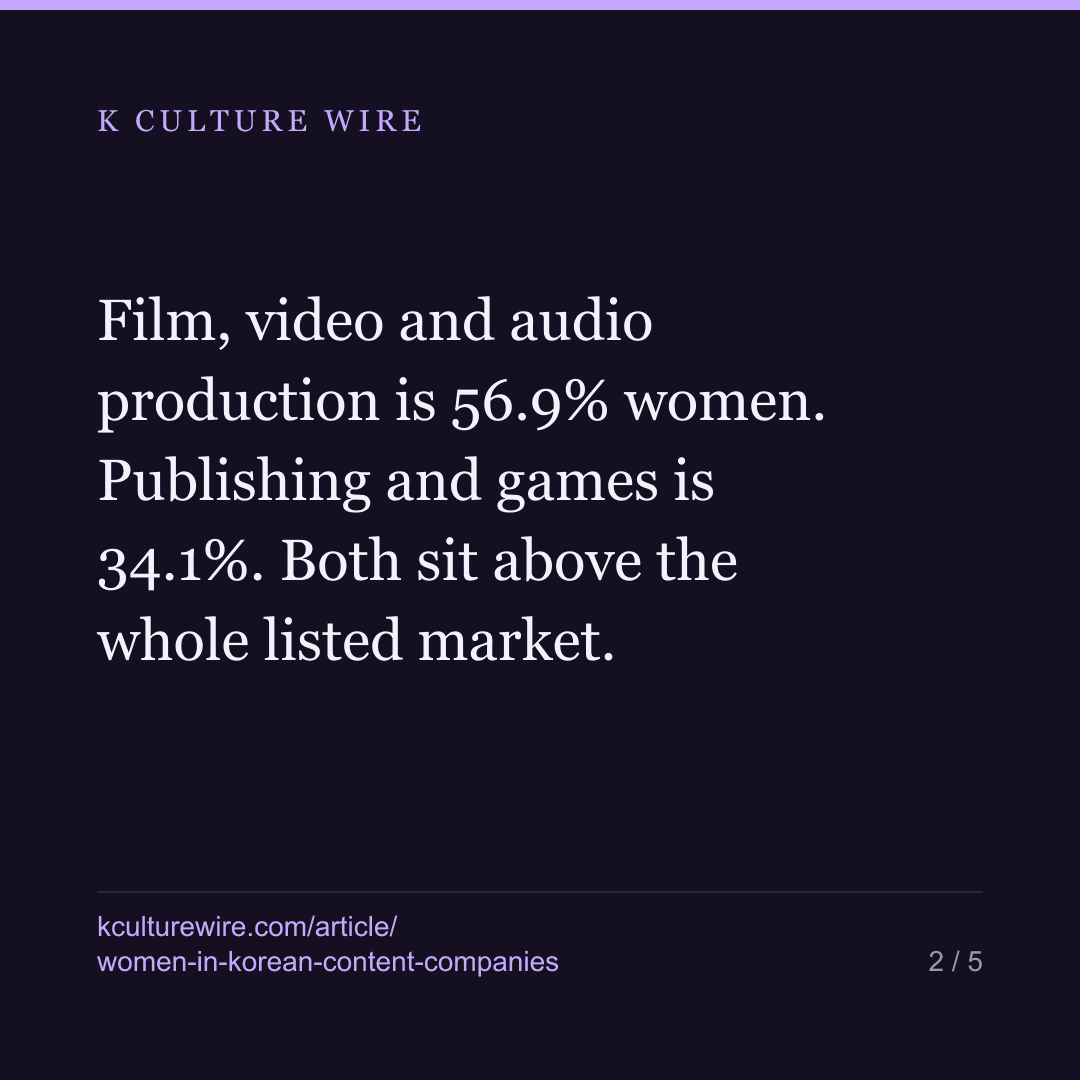
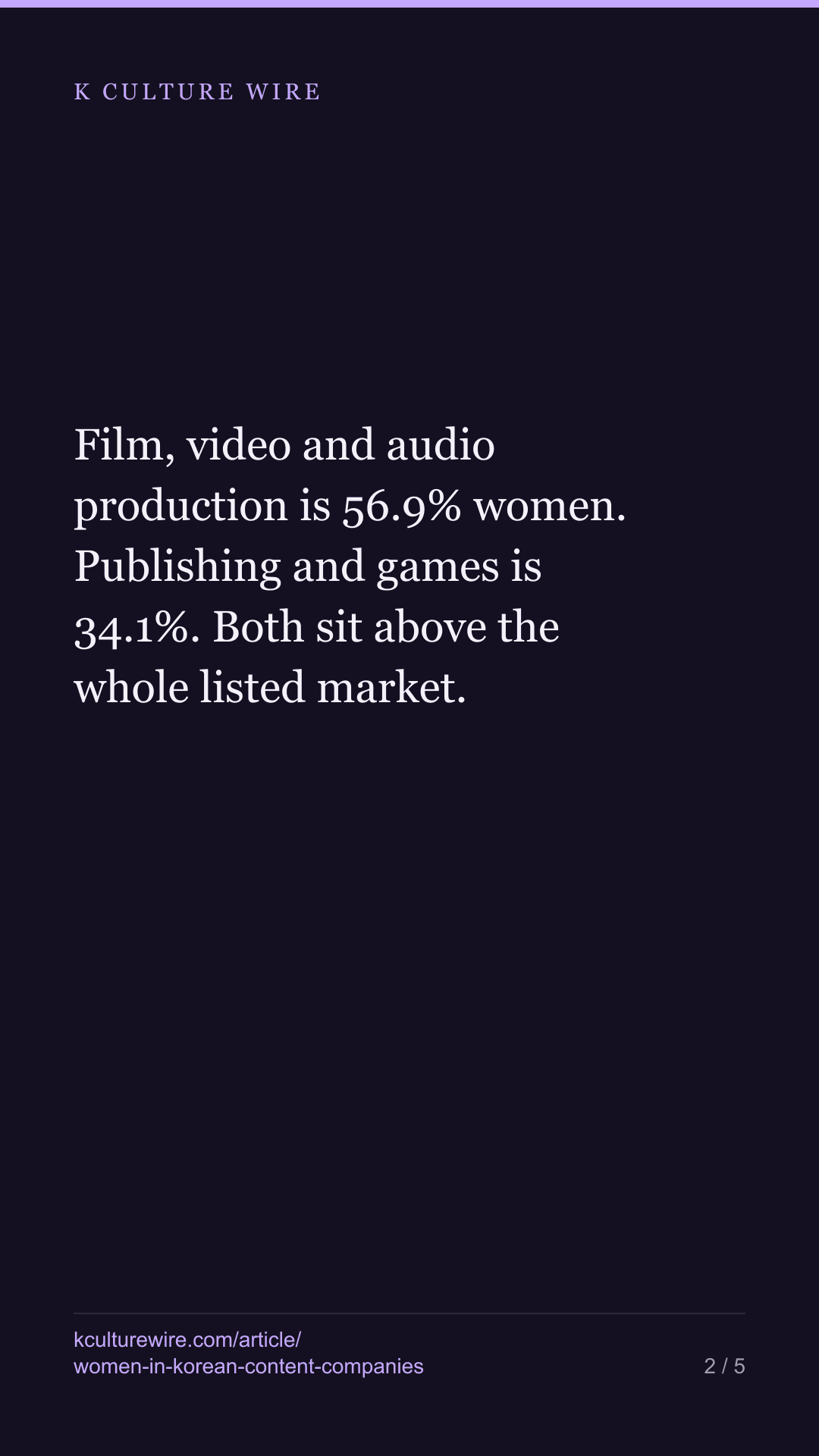
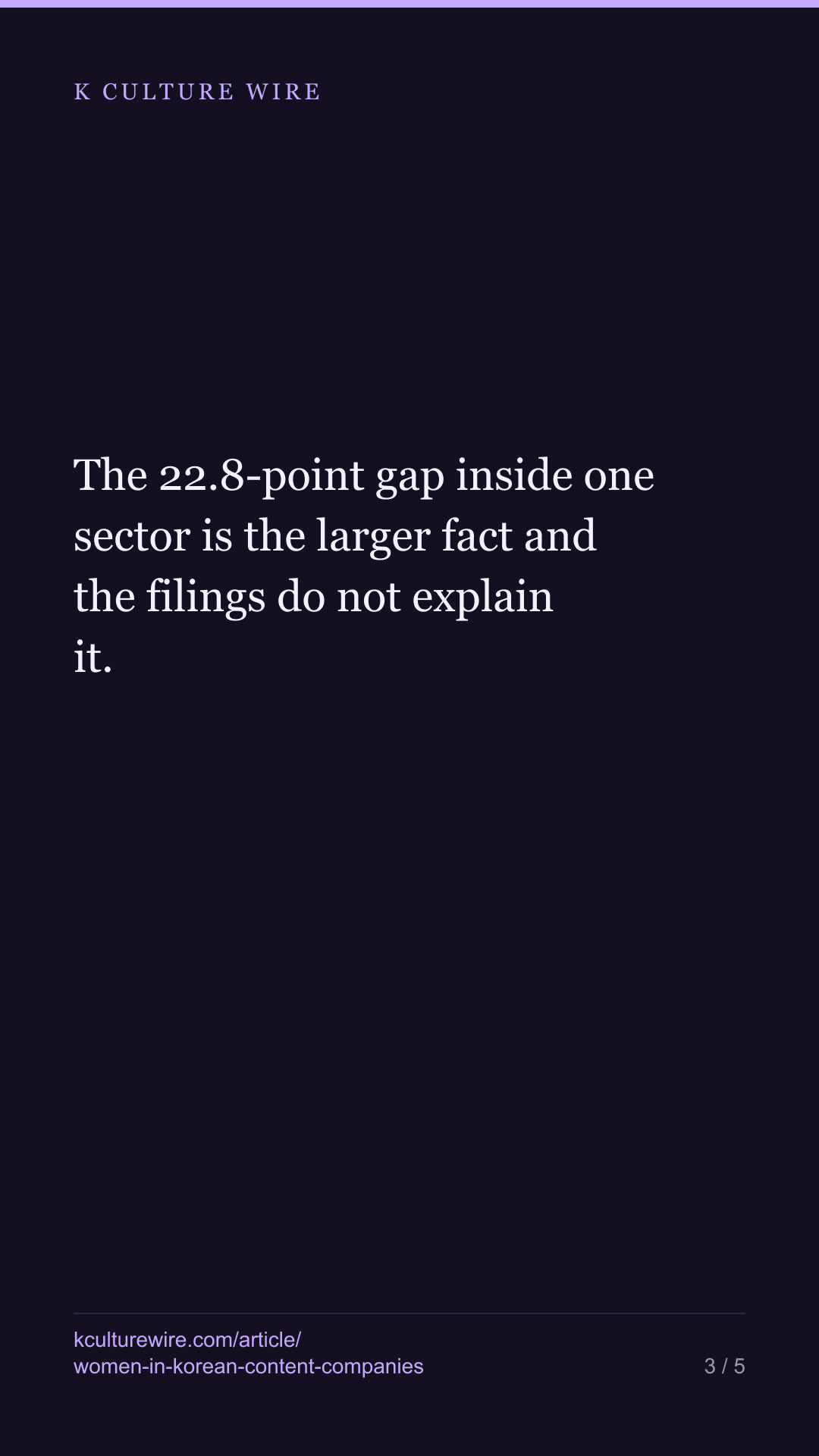
Film, video and audio production is 56.9% women. Publishing and games is 34.1%. Both sit above the whole listed market. The 22.8-point gap inside one sector is the larger fact and the filings do not explain it.
The table this is written from: /industry
Across the 248 listed Korean content companies that disclose it, 38.8% of staff are women — against 28.0% across all 2,779 listed companies that report the same field.
That is the headline, and it is the less interesting of the two facts here.
| Staff | Women | |
|---|---|---|
| Film, video and audio production | 10,540 | 56.9% |
| Broadcasting | 6,393 | 47.5% |
| Publishing (includes games) | 51,876 | 34.1% |
| All 248 content companies | 68,809 | 38.8% |
| Whole listed market | 1,865,198 | 28.0% |
The spread inside the sector is 22.8 points. The gap to the rest of the market is 11. Whatever “content industry” means for this question, it means less than which part of it you are looking at.
Why the sector total lands where it does
Film is the most female workforce in the table and one of the smallest — 10,540 people. Publishing and games is the least female and by far the largest at 51,876, three-quarters of the sector’s staff.
So the sector figure of 38.8% is much closer to games than to film, because games is where most of the people are. A reader who takes 38.8% as a description of working in Korean content will be wrong about both ends of it — too low for film, too high for games.
This is the ordinary hazard of a weighted average over unlike parts, and it is why we print the three rows rather than the one.
What we cannot tell you
The disclosure is a headcount split and nothing else. It does not say who holds which roles, who is senior, or what anyone is paid. A workforce that is 56.9% women may or may not have women in the jobs that decide what gets made, and this filing is silent on it.
We have no explanation for the 22.8-point gap. We looked for one in the same filings — company age, company size, tenure, pay — and none of them line up with it. Broadcasting is the oldest and best-paid group and sits in the middle. Film is the lowest-paid and the most female. Publishing has the shortest tenure and the fewest women. There is no ordering of the three by any other column that reproduces the gender ordering.
Stating that plainly is the honest end of this piece. The number is large, it is measured the same way in all three groups, and we do not know why it is what it is.
And it is listed companies only. Much of Korean film and drama production is private and files none of this. The 10,540 people in the film row are the ones inside listed companies, which is not the same as the people who make Korean films.
Gender splits the sector one way. Tenure and pay split it another. Read the three labour markets underneath →
Where these numbers come from
Sources
- Financial Supervisory Service (Korea), DART — Annual report employee disclosures (직원 등의 현황), filing year 2025, for every listed company that reports both headcount and the male/female split · https://dart.fss.or.kr
What we checked
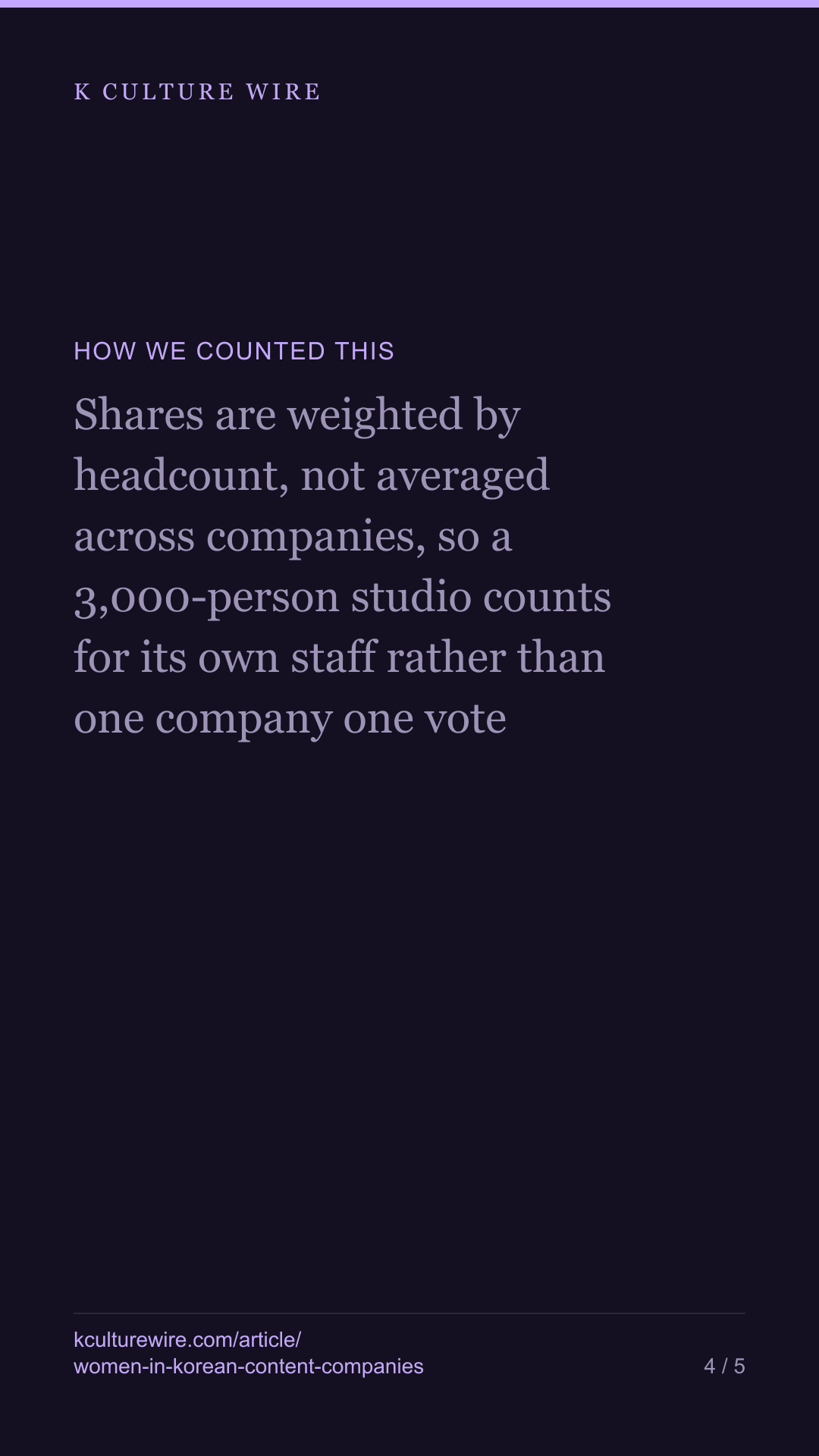
- Shares are weighted by headcount, not averaged across companies, so a 3,000-person studio counts for its own staff rather than one company one vote
- The three groups are each company's own reported industry code. Korean game companies file as publishing, which is why that group carries the filing's name and not the medium's
- The market baseline is the same field on the same filing for all 2,779 listed companies that report it — 1,865,198 workers
What we left out, and why
- Any claim about seniority, pay by gender, or who holds which roles. The disclosure is a headcount split and carries none of that
- Any claim about the Korean content industry as a whole. This is 248 listed companies; much of production is private and files nothing
- Any explanation of the 22.8-point internal gap. We looked for one in these filings and there is nothing in them that accounts for it
The data behind this
Written from the same data
Take this away — 10 cards
The figures in this article, as images. Free to repost with the address on them.
If you work in this business
Everything on this page is measured from the same weekly Netflix lists, per market and per title. We publish the pages free; what we sell is the same measurement cut to one company's catalogue — including the figures behind /industry and /workforce.
What a company sheet contains, and what it cannot tell you →