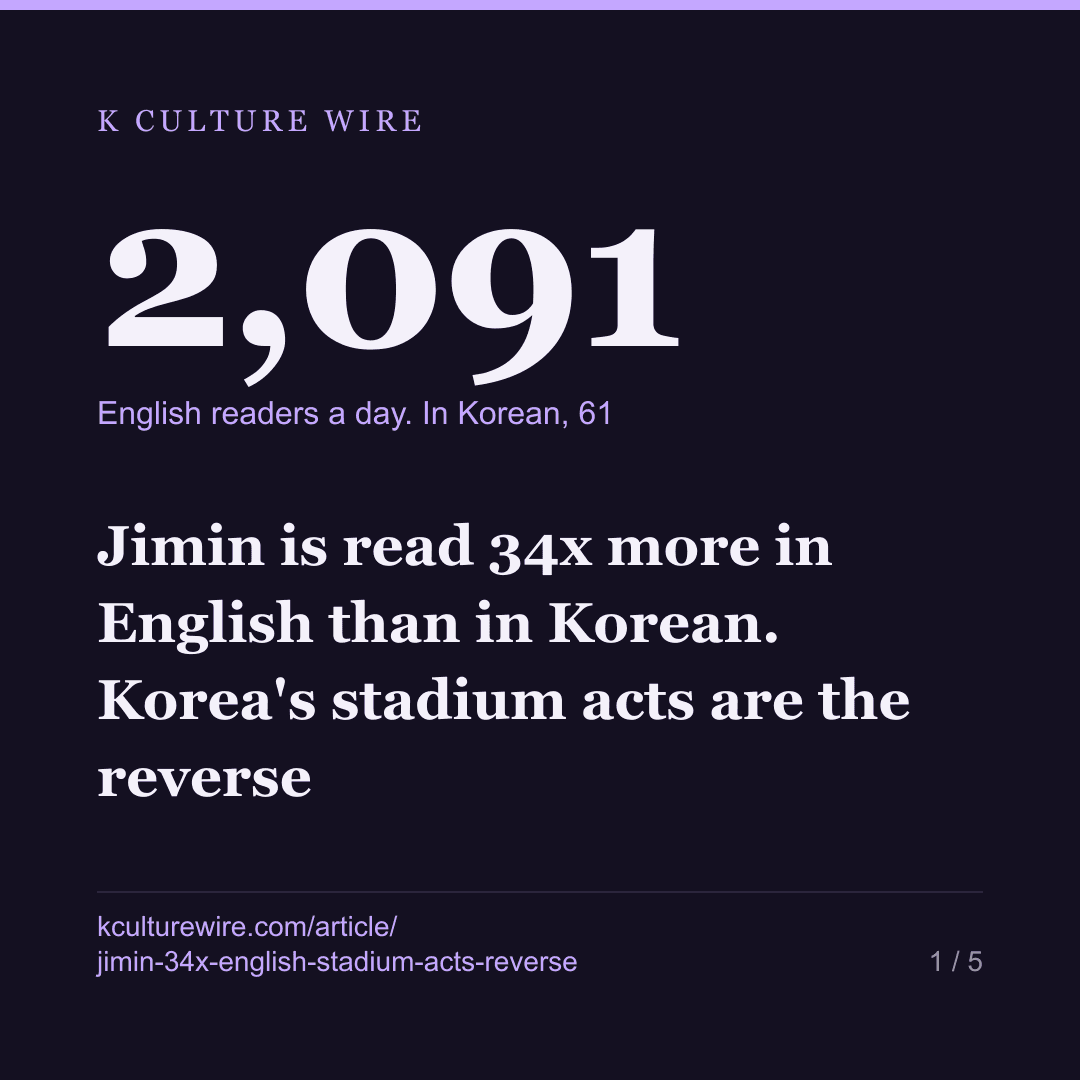
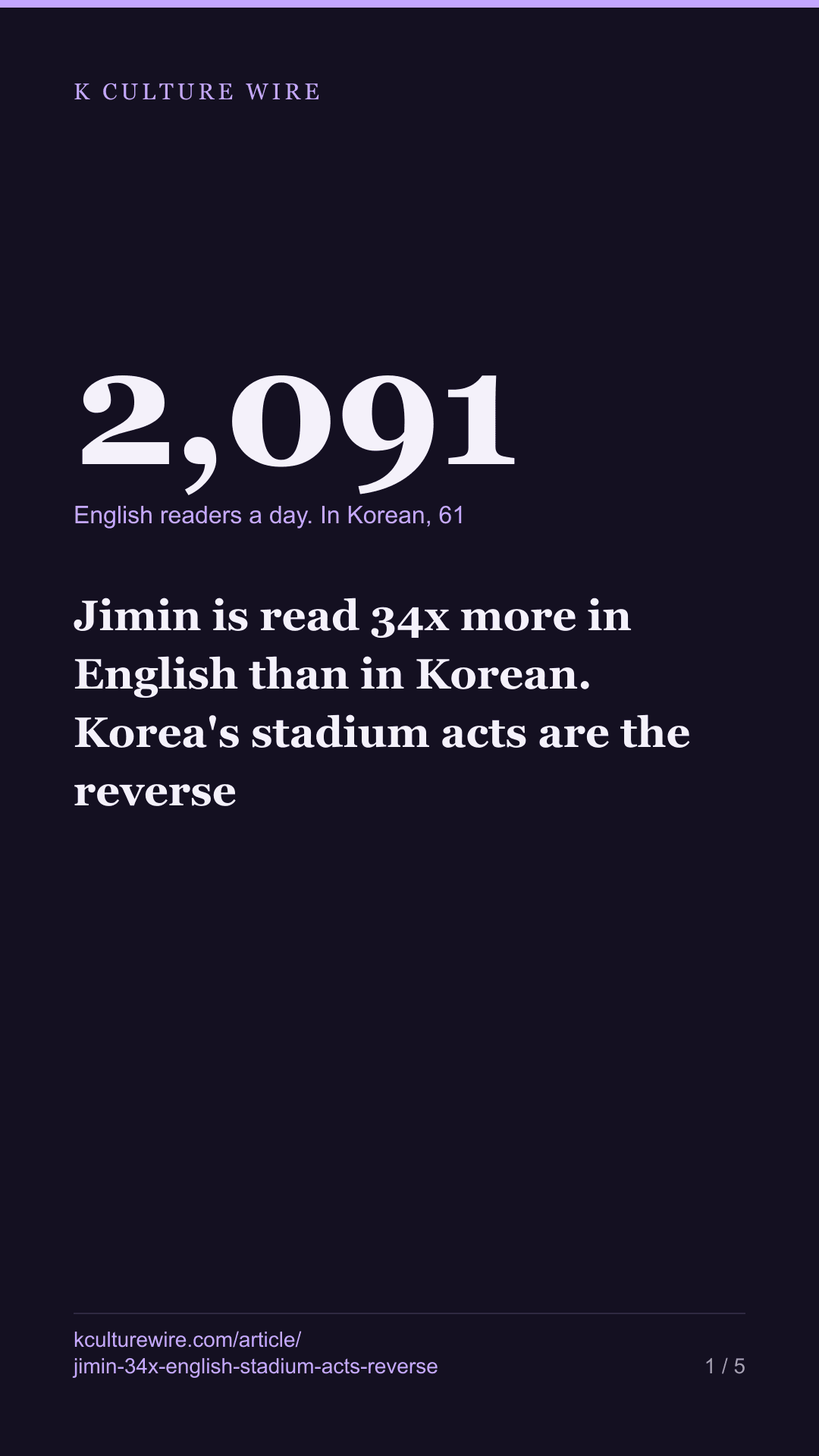
Jimin is read 34x more in English than in Korean. Korea's stadium acts are the reverse
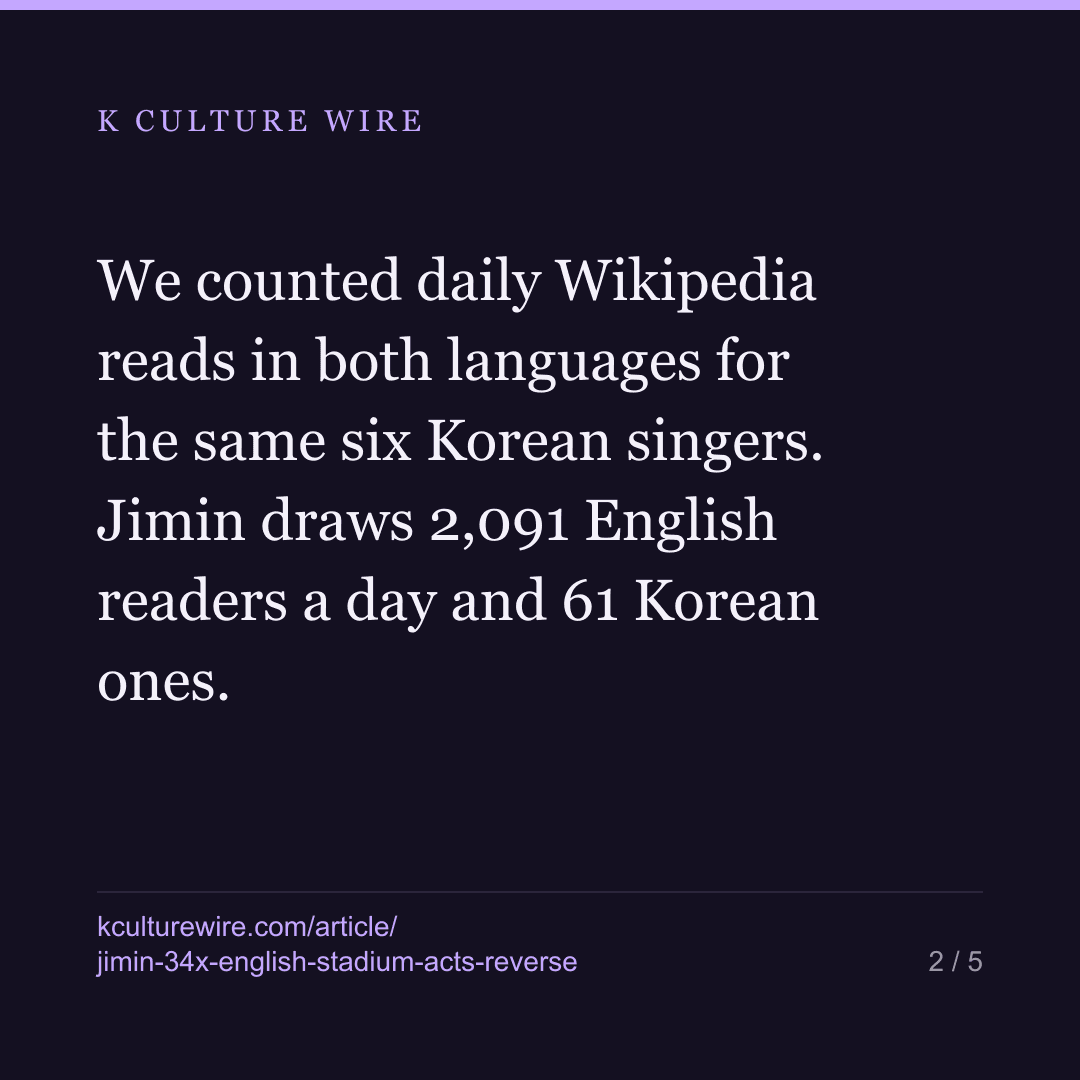
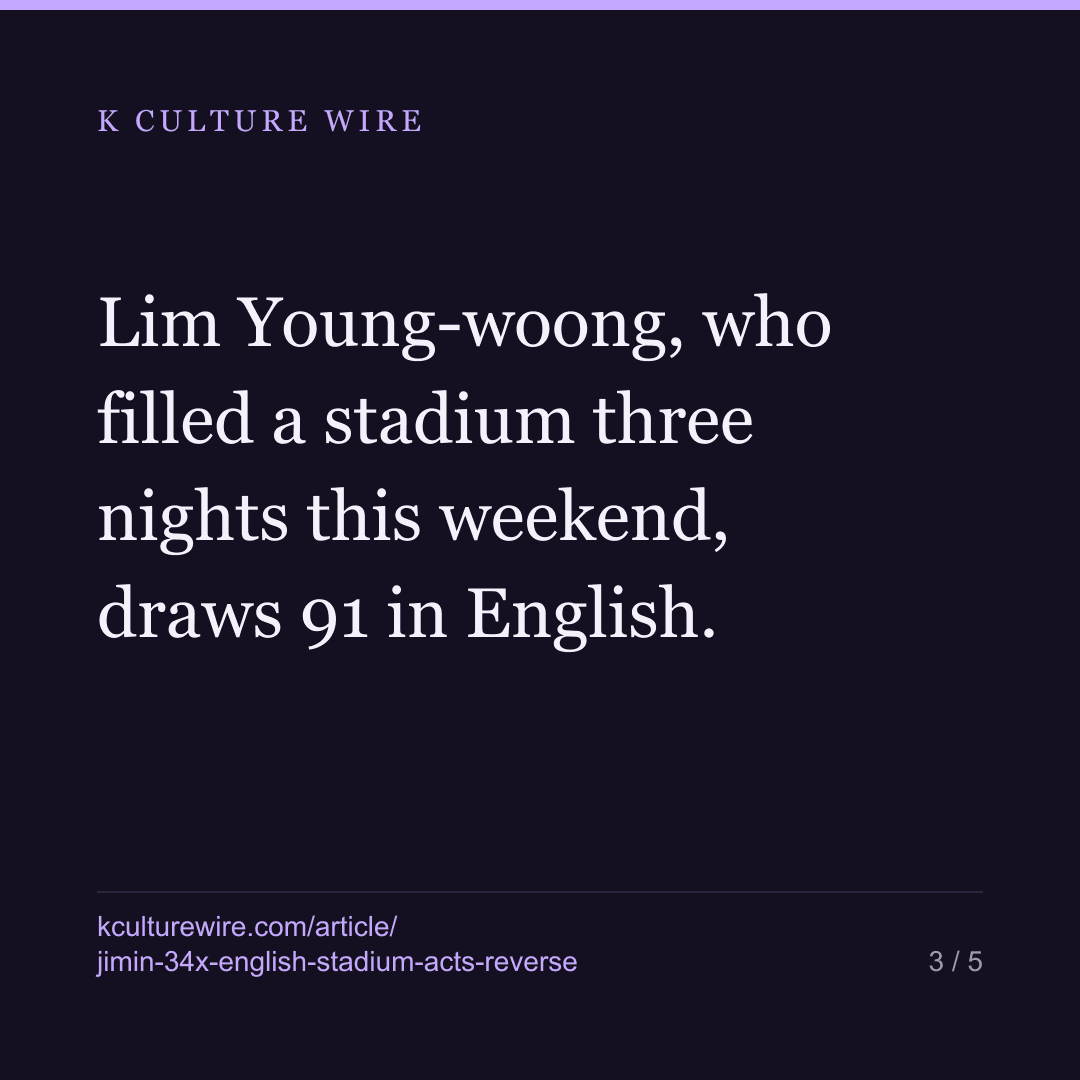
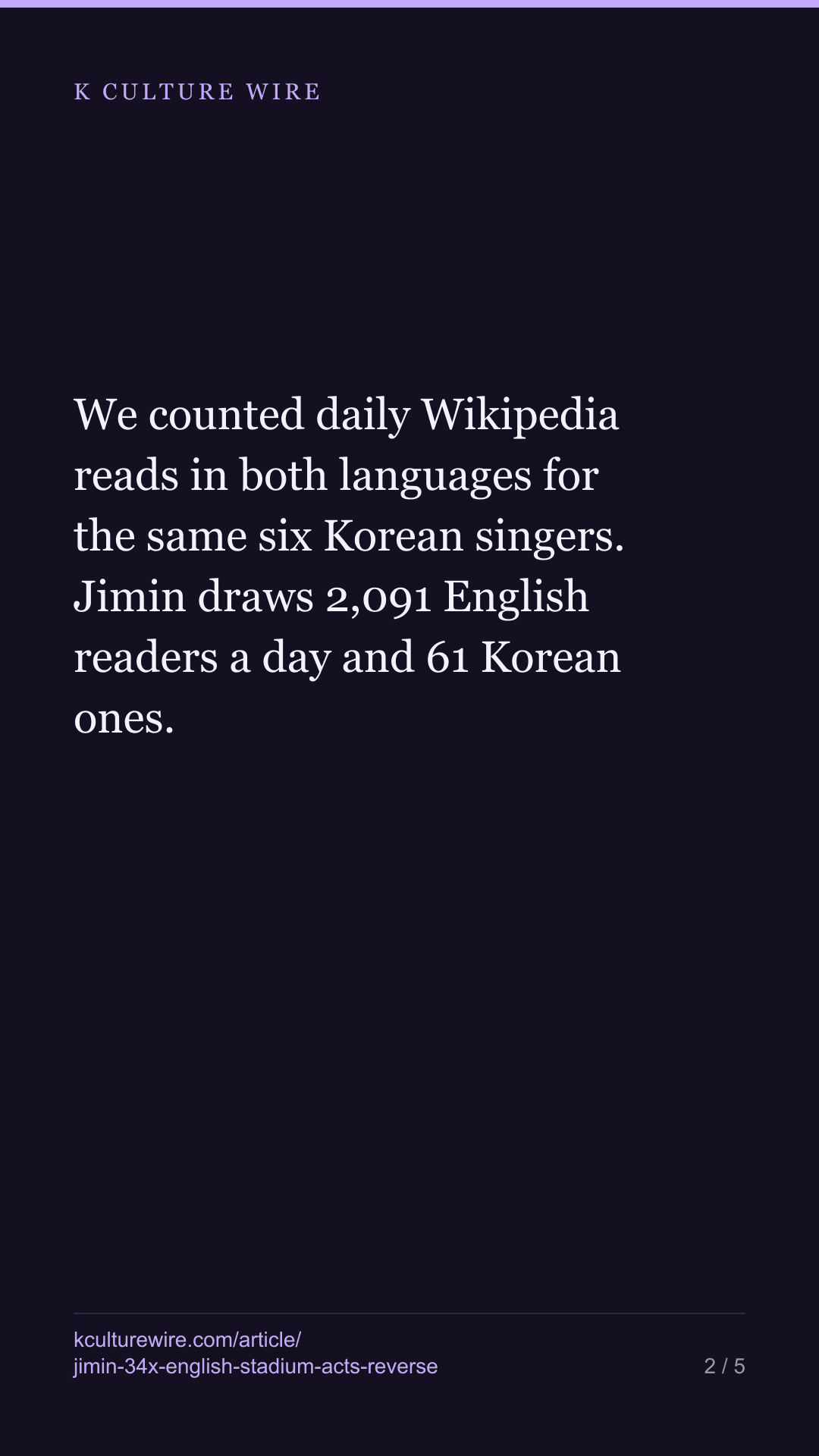
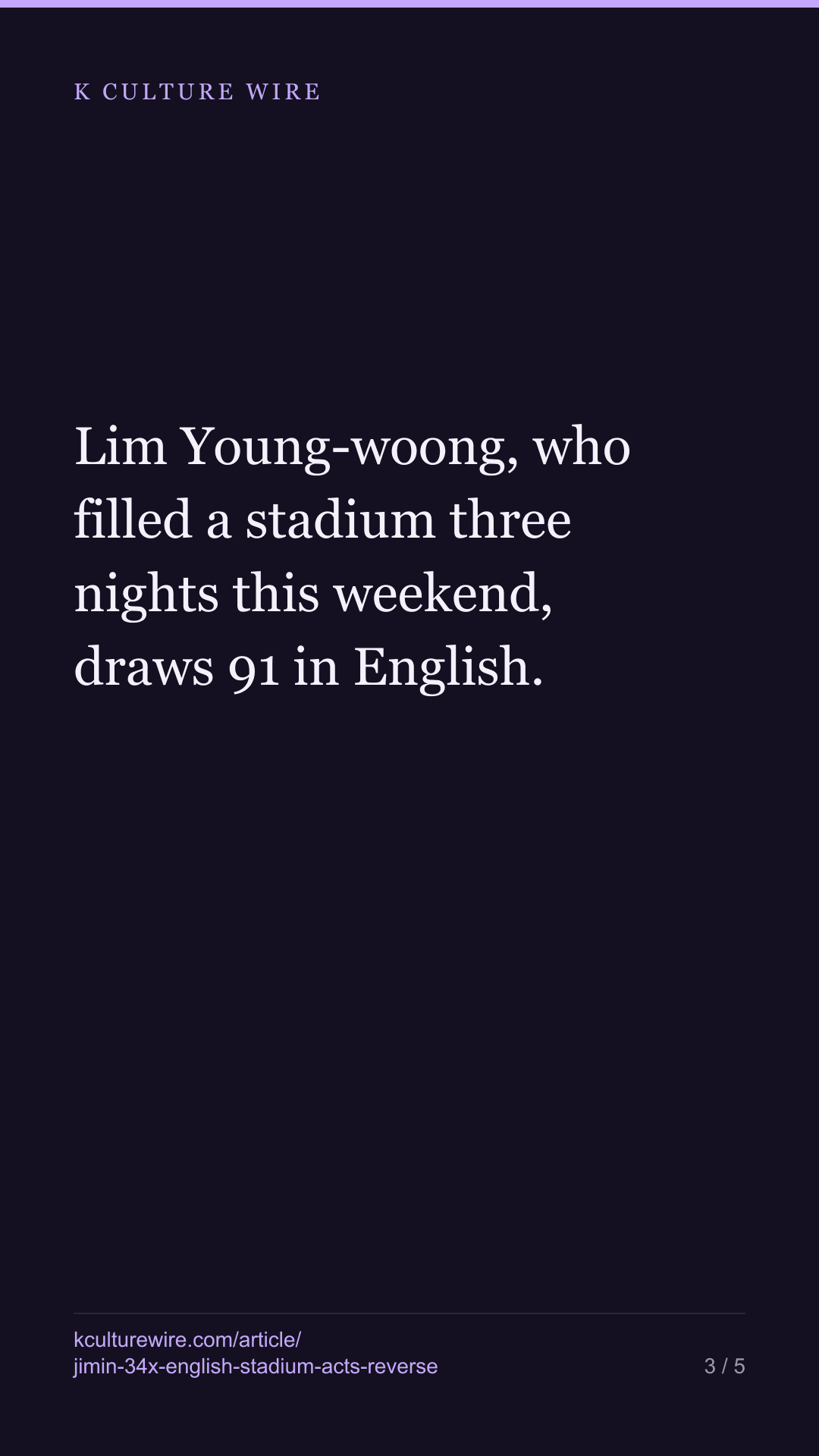
We counted daily Wikipedia reads in both languages for the same six Korean singers. Jimin draws 2,091 English readers a day and 61 Korean ones. Lim Young-woong, who filled a stadium three nights this weekend, draws 91 in English.
The table this is written from: /which-language-reads-you
If you write about Korean music in English, you are working from an English-language measure whether you meant to or not — search interest, Wikipedia traffic, English-language coverage. It is worth knowing what that measure sees clearly and what it barely registers.
Wikipedia lets us check, because it counts each language edition separately.
The same six people, two languages
| Singer | Kind | Korean | English | Which language wins |
|---|---|---|---|---|
| Jang Minho | Trot | 59 | 17 | Korean, by 3.5× |
| Young Tak | Trot | 64 | 28 | Korean, by 2.3× |
| Lim Young-woong | Trot | 149 | 91 | Korean, by 1.6× |
| IU | Solo | 195 | 1,844 | English, by 9.5× |
| Rosé | Idol | 105 | 2,461 | English, by 23.4× |
| Jimin | Idol | 61 | 2,091 | English, by 34.3× |
Median daily reads over the last 30 days. The full table and method are here.
Jimin is opened 2,091 times a day in English and 61 times in Korean. Same encyclopedia, same person, thirty-four times the difference depending on which edition you open.
The reverse case, and why it is worth a paragraph
Lim Young-woong played Goyang Stadium three nights running this weekend, the run reported at around 95,000 seats across the three days. In our measure he draws 91 English readers on an ordinary day — fewer than a twentieth of Jimin.
That is not a claim that he is small. It is a claim about the instrument. An artist whose audience reads Korean produces almost no signal in an English-language measure, however many seats they sell. All three trot singers we checked sit on that side of the line, and all three of the acts English outlets cover heavily sit on the other.
What this means if you read English coverage of K-pop
The English-language picture of Korean music is not a shrunken copy of the Korean one. It is a differently shaped picture. The acts that dominate it are the acts whose audience already reads English, and the gap is not small — it runs from 9.5× one way to 3.5× the other across these six names alone.
We publish this because every reading figure on this site is counted in English, including all of ours. A reader is entitled to know which parts of Korean music our own numbers systematically under-count. This is one of them, along with the acts that have no English article at all.
What we could not measure
Popularity, sales, streams or attendance — none of those are in this. The concert figure above is someone else’s count, quoted as the occasion for looking, and it is not used in any calculation here.
Korean Wikipedia is also a smaller encyclopedia than English Wikipedia overall, so some of this gap is about the encyclopedias rather than the artists. We cannot separate the two with this data, so we do not claim to.
This counts which language an encyclopedia page is opened in. It is not a measure of anyone’s career, and six people are six people.
Where these numbers come from
Sources
- Wikimedia — Pageviews API, ko.wikipedia and en.wikipedia, all-access, user agents only (bots excluded), daily, last 60 days, median of the most recent 30 per article · https://wikimedia.org/api/rest_v1/
- Wikipedia — REST summary endpoint on both editions, used to confirm each title is the person and not a disambiguation page. The Korean title for one act resolved to a disambiguation page and that act was dropped · https://ko.wikipedia.org/w/api.php
- Hankyung — Report of the 10th-anniversary stadium run at Goyang Stadium, 4-6 September 2026. The attendance figure is theirs; we did not count it and it is not used in any calculation here · https://www.hankyung.com/article/202609055978H
What we checked
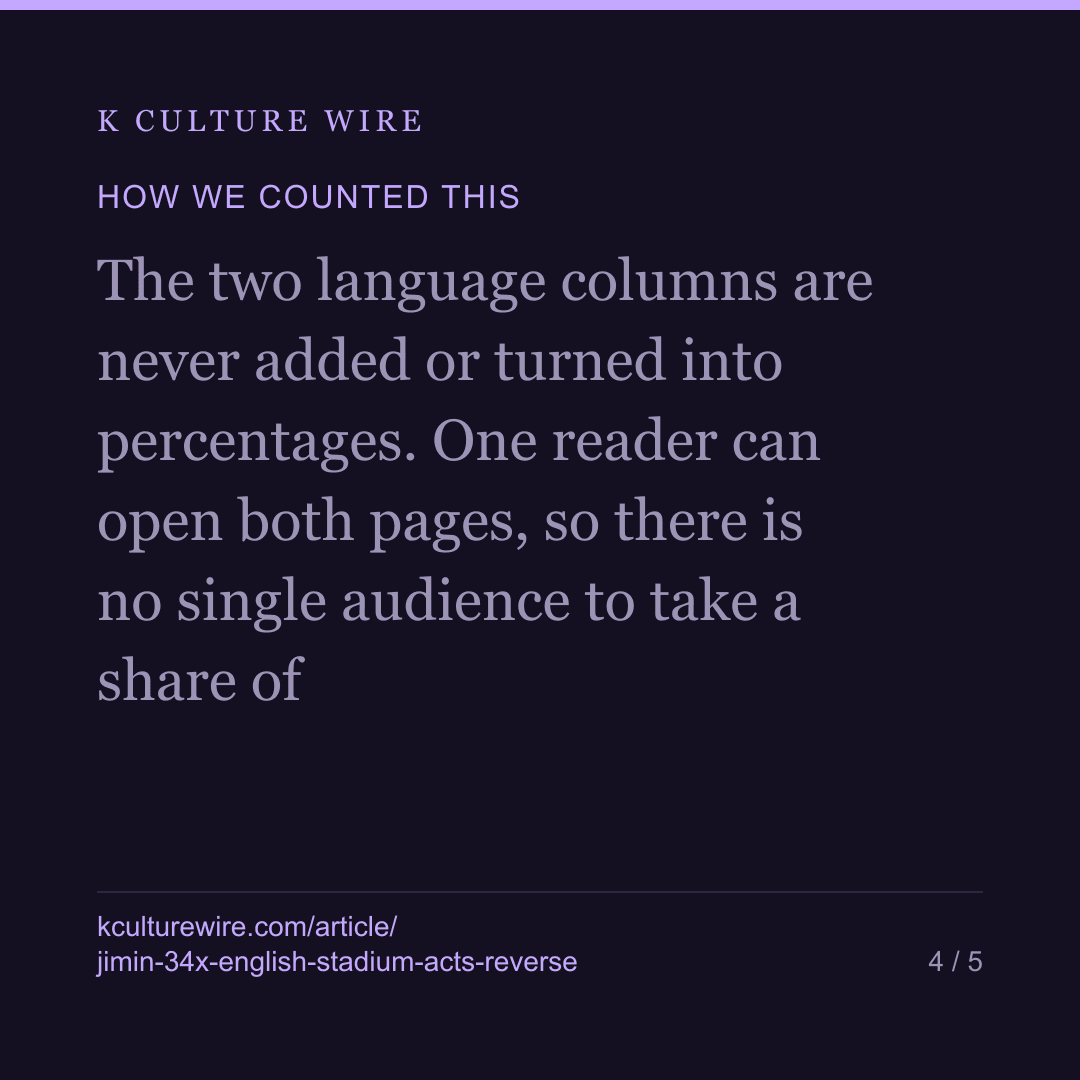
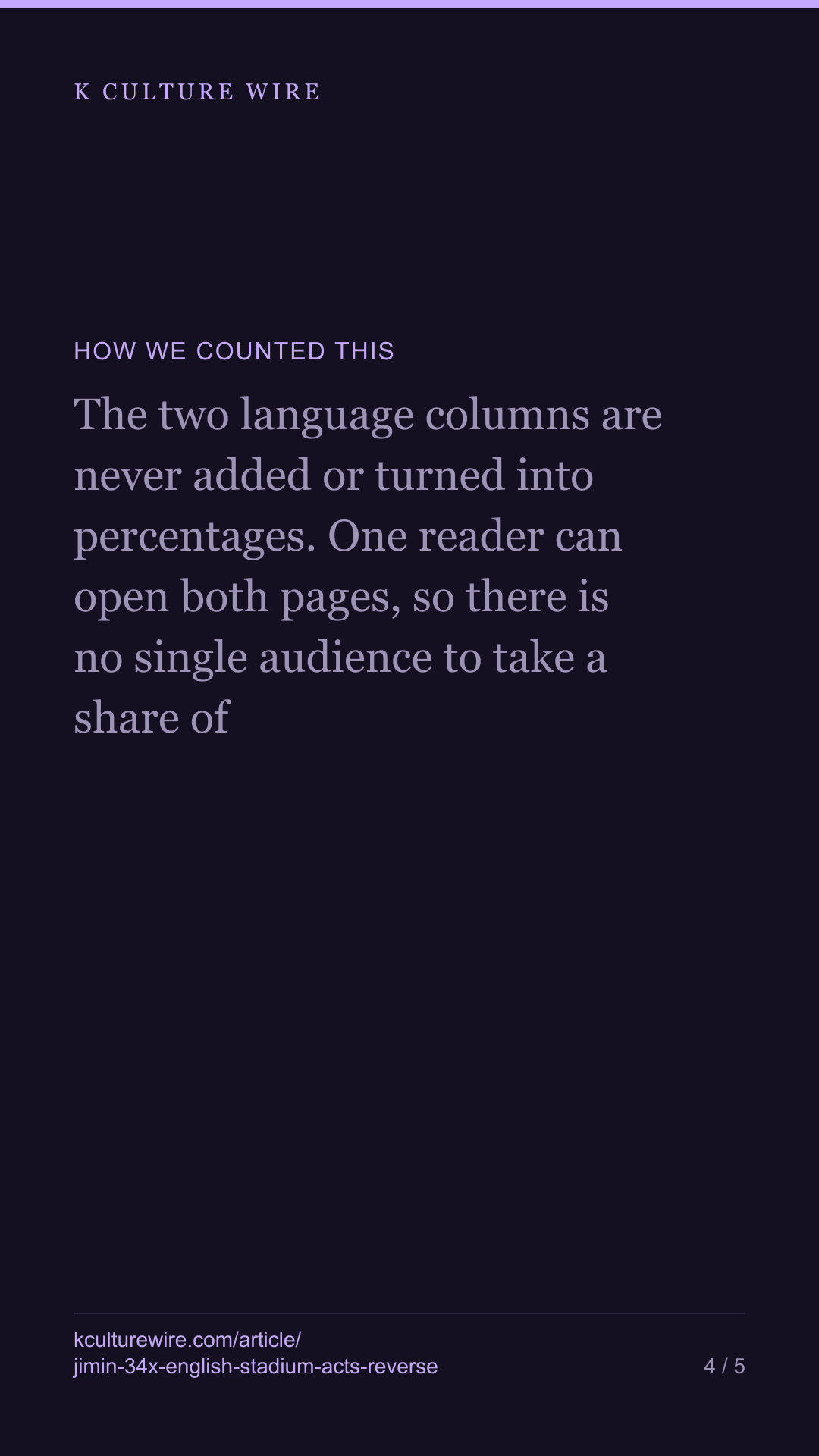
- The two language columns are never added or turned into percentages. One reader can open both pages, so there is no single audience to take a share of
- Medians over 30 days, not averages. A comeback or a concert week would otherwise decide a figure by itself
- Each title was checked against that edition's own one-line description before its reads were counted, on both the Korean and the English side
- A ratio below one is reported to three decimals rather than rounded. Jimin's Korean-to-English ratio is 0.029, and rounding it to 0 would have said nobody reads him in Korean, which is false
- Korean Wikipedia is a smaller encyclopedia than English Wikipedia overall. That is stated on the page rather than left for the reader to discover, because it is part of why these numbers look as they do
- Six people, chosen to put two kinds side by side. Not a sample of an industry and not described as one
The data behind this
Written from the same data
Take this away — 10 cards
The figures in this article, as images. Free to repost with the address on them.
If you work in this business
Everything on this page is measured from the same weekly Netflix lists, per market and per title. We publish the pages free; what we sell is the same measurement cut to one company's catalogue — including the figures behind /which-language-reads-you and /cannot-see.
What a company sheet contains, and what it cannot tell you →