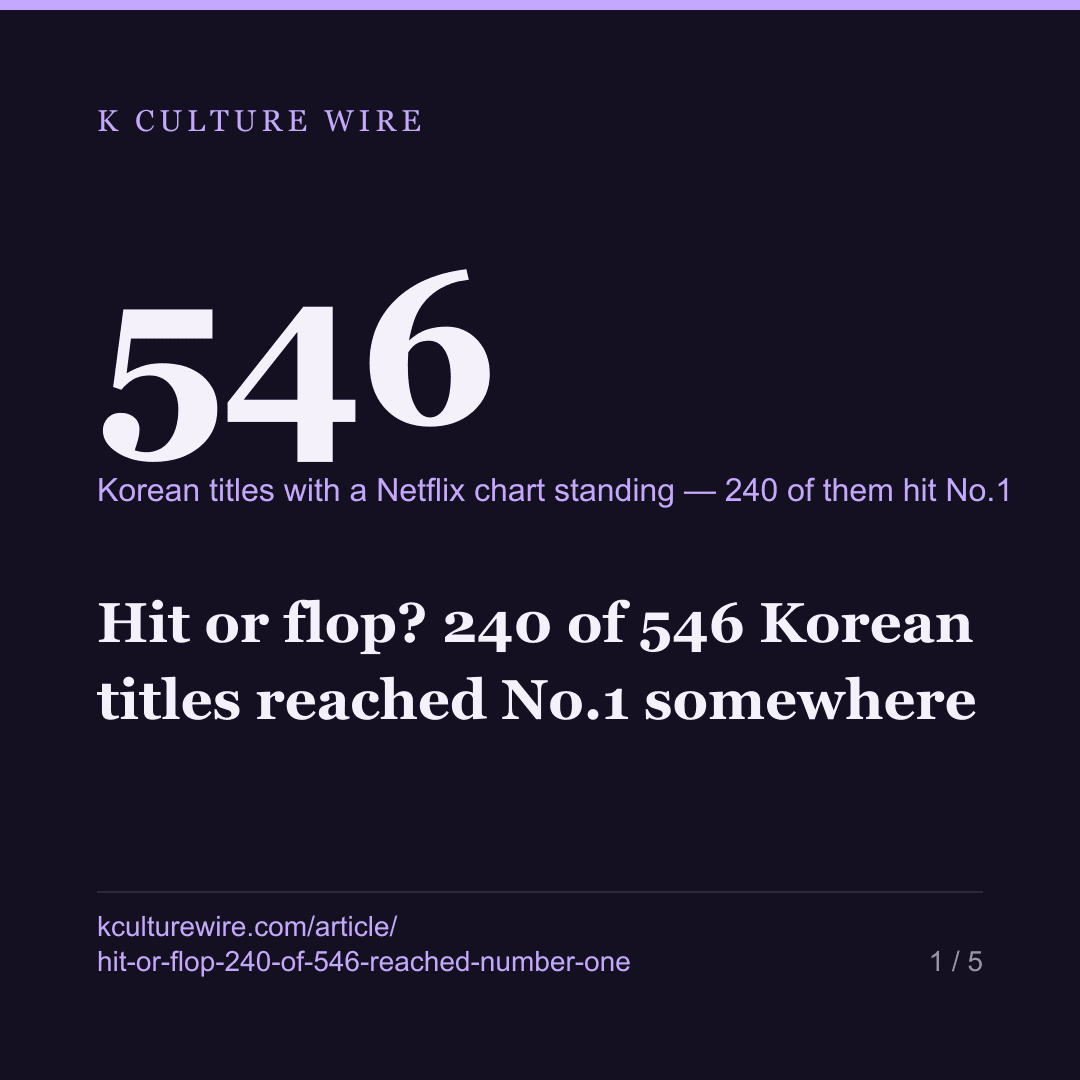
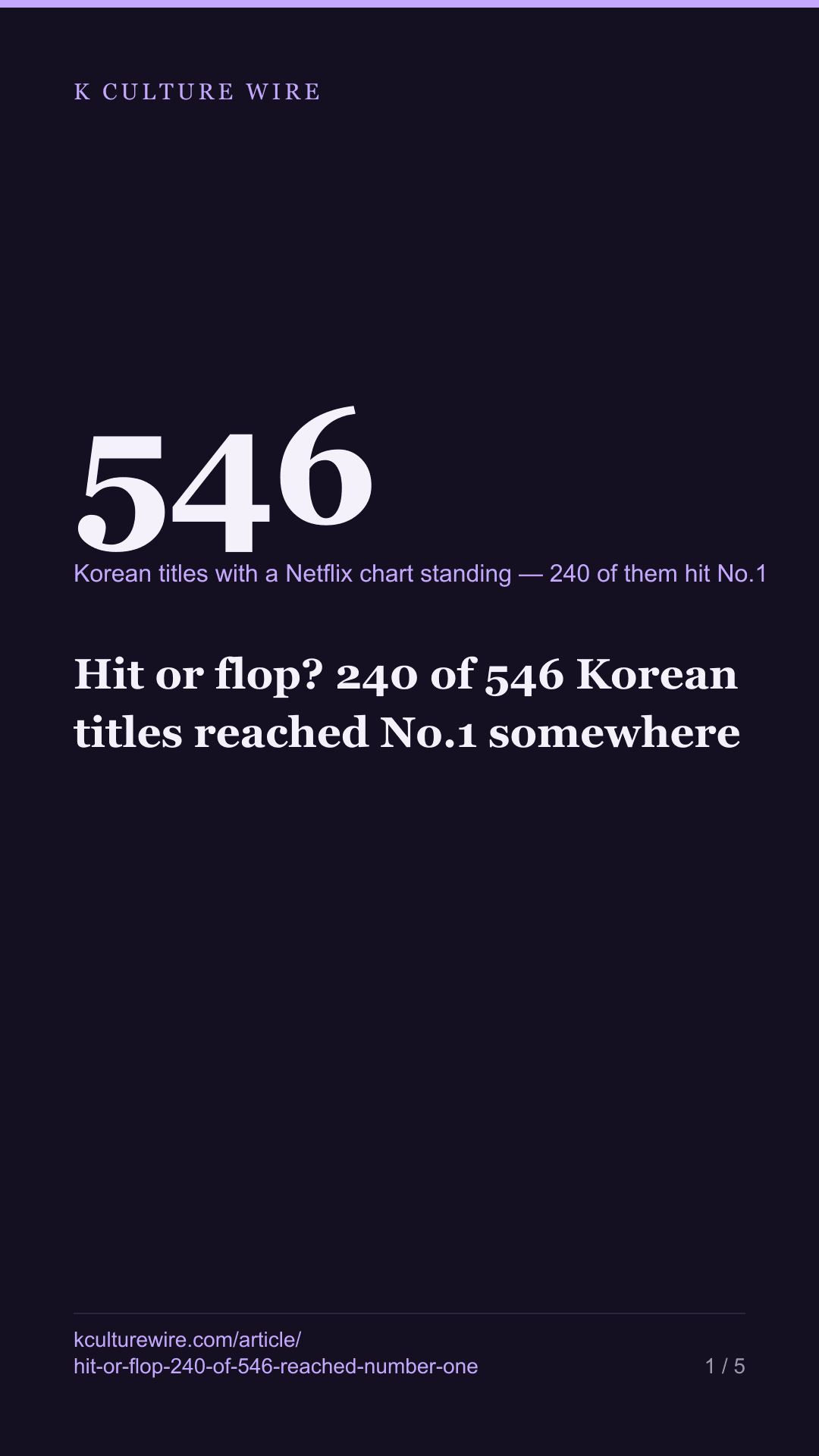
Hit or flop? 240 of 546 Korean titles reached No.1 somewhere
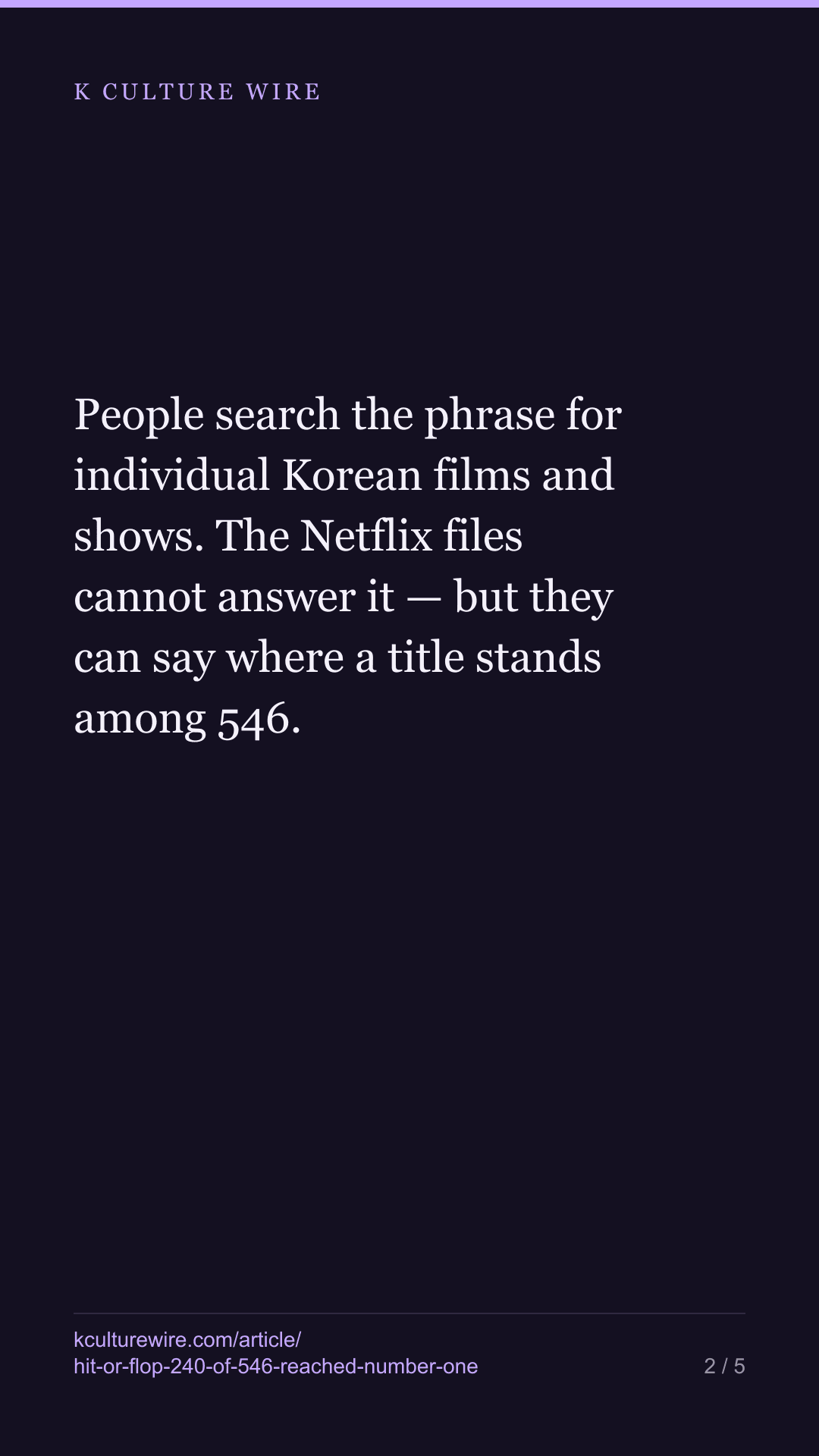
People search the phrase for individual Korean films and shows. The Netflix files cannot answer it — but they can say where a title stands among 546. Reaching No.1 in some country turns out to be the common case, not the rare one.
The table this is written from: /titles
Twice in the last four weeks, somebody reached this site by typing a Korean film’s name followed by “hit or flop”. Once for The 8th Night, once for Concrete Utopia. They did not click. We had nothing on the page that answered them, because we have never used those two words.
We still will not use them. But the question underneath is a fair one, and the Netflix files can answer a version of it — just not the version people usually mean.
What the files can and cannot say
Netflix publishes weekly top ten lists per country. From those we can count, for any Korean title that ever charted, three things: how many countries it reached, how many weeks it stayed, and the best rank it managed. On 30 August we placed each of those three, for 546 of the 974 Korean titles, as a position within the whole set.
What the files never contain is money, hours watched, budget, or whether the thing was any good. A title that charts in one country for one week at No.9 may have cost nothing and earned plenty. Nothing here can tell you that, and a page that claims to is not reading these files.
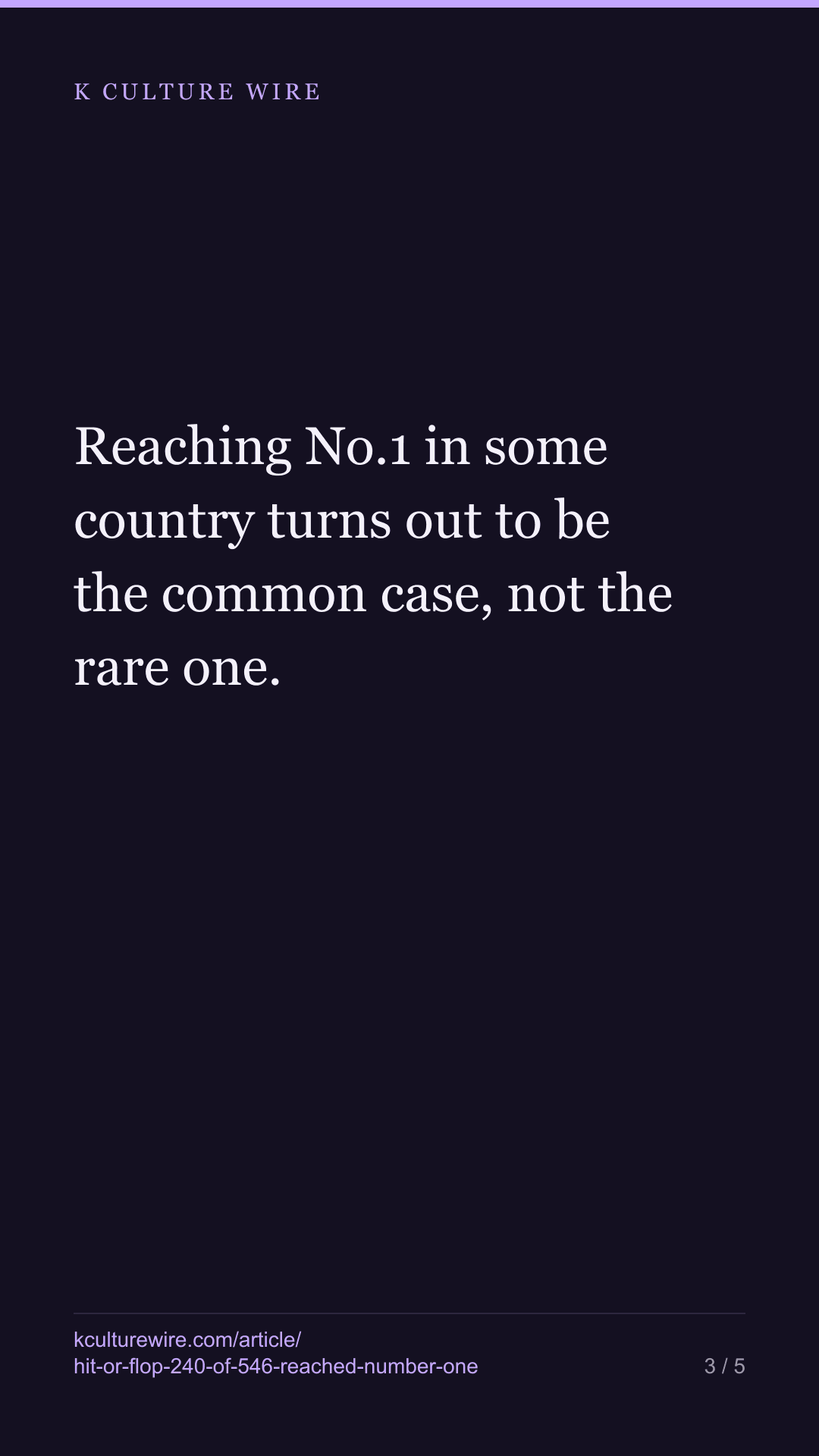
Reaching No.1 is the common case
This is the number that undoes the question. Of the 546 titles with a standing, 240 reached No.1 in at least one country — 44.0%.
Not the top ten. The top of it. Nearly half.
So “it hit No.1” is not a claim that separates anything. It is closer to a description of the median Korean title that charted at all. Of those 240, 26 reached No.1 in exactly one country and nowhere else.
The three measures disagree with each other
If “hit” meant one thing, the three counts would move together. They do not. 50 titles — 9.2% — sit more than 50 percentage points apart depending on which measure you use.
12.12: The Day is the clearest case. It reached one country, stayed twelve weeks, and peaked at No.1. Read by rank it is at the very top of the set. Read by countries reached it is below 54% of everything else. Both readings are correct. They are answers to different questions.
Check In Hanyang runs the other way: nine countries, four weeks, best rank 6. Wider than most, never near the top.
The two titles people actually asked about
Both reached No.1. That is where the similarity ends.
- The 8th Night — 10 countries, 5 weeks, best rank 1. Wider than 77% of the set.
- Concrete Utopia — 2 countries, 9 weeks, best rank 1. Longer-running, far narrower.
If someone tells you one of these was a hit and the other a flop, the files do not support the sentence in either direction. They support two different sentences, and both are about reach and duration rather than success.
Why we leave the word alone
26.7% of these titles charted in exactly one country. The middle of the set — half above, half below — reached 7 countries and stayed 6 weeks. A person deciding whether a film “flopped” is usually comparing it against an imagined norm; the actual distribution is the thing worth seeing, and it is published — every title we have standing for, every market side by side, and all 93 countries counted the same way.
We will keep counting. We will not be the site that tells you a film failed.
Where these numbers come from
Sources
- Netflix — Public Top 10 files, all-weeks-countries.tsv. Standing computed for 546 of 974 Korean titles on 2026-08-30 — country count, weeks on chart, and best rank, each as a position within all 974 · https://www.netflix.com/tudum/top10
- Google Search Console — Our own property, 28 days to 2026-09-03, query and page dimensions together · https://www.kculturewire.com/
What we checked
- A chart position is not a viewing figure. Nothing here measures hours watched, money earned, or whether anyone liked a title
- 546 of the 974 titles have a standing computed. The remaining 428 charted too thinly for all three measures to be placed, and we say so rather than filling them with zeroes
- Reaching No.1 in one country and reaching No.1 in forty are the same words and very different facts. That difference is the subject of this piece
- The two titles named here came to us through search, not through selection. We did not pick them for making the point
- Russia is excluded from every figure on this site, so it is absent from these counts too
The data behind this
Written from the same data
Take this away — 10 cards
The figures in this article, as images. Free to repost with the address on them.
If you work in this business
Everything on this page is measured from the same weekly Netflix lists, per market and per title. We publish the pages free; what we sell is the same measurement cut to one company's catalogue — including the figures behind /titles and /catalogue-depth and /by-country.
What a company sheet contains, and what it cannot tell you →