Stars · music
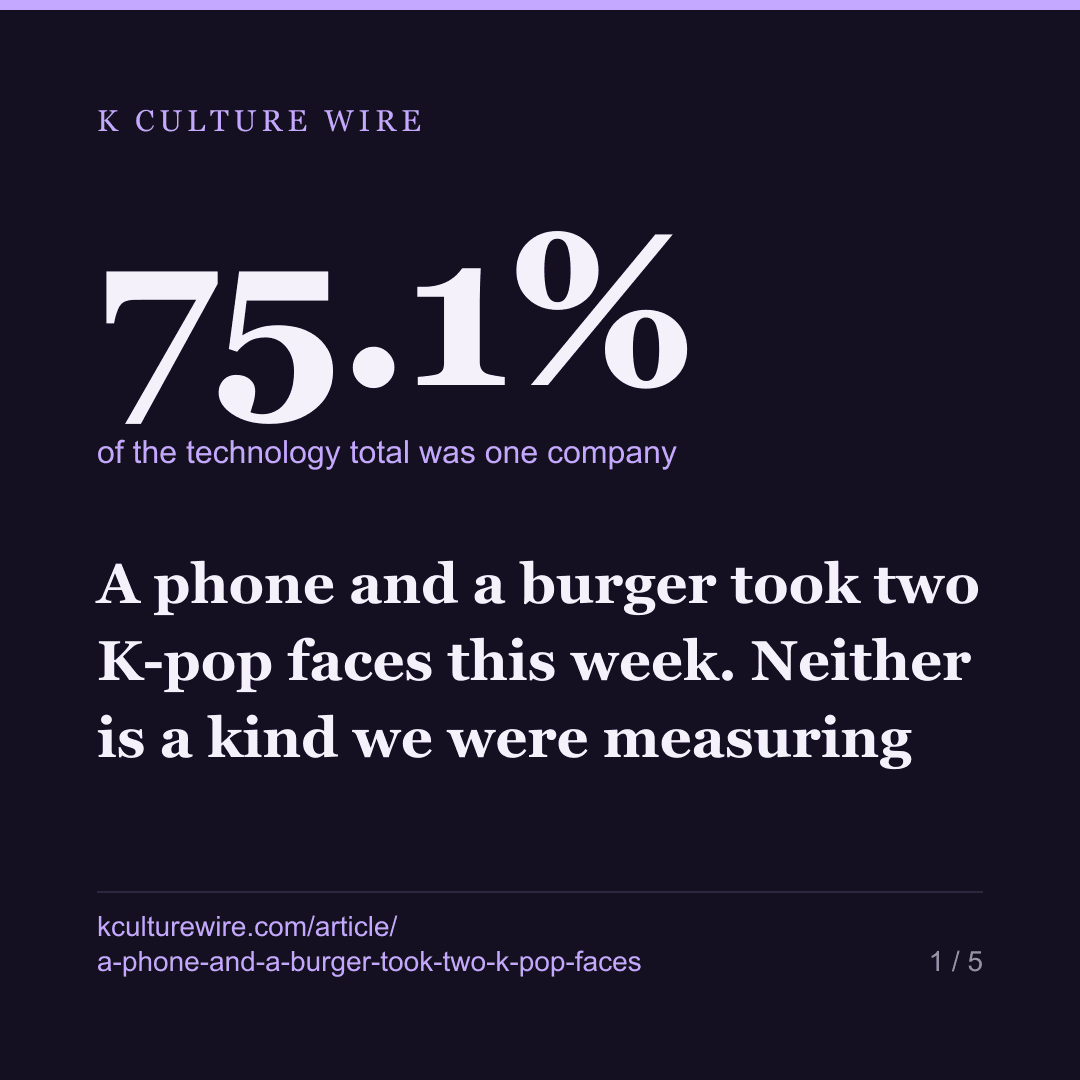
A phone and a burger took two K-pop faces this week. Neither is a kind we were measuring
One morning brought two announcements: a BLACKPINK member fronting an iPhone camera, a BIGBANG member fronting McDonald's. Our brand panel covered luxury, jewellery, fashion and cars — not phones, not burgers. So we added both.
The table this is written from: /brand-kinds
Two things happened in the same morning feed on 10 September 2026. A BLACKPINK member was announced as the new face of an iPhone camera. A BIGBANG member was announced as the new face of McDonald’s. Four separate items covered the first and one covered the second, and between them they described a kind of brand deal that has become ordinary.
We have a panel for exactly this question. It measures how much a brand is read about across the four Southeast Asian Wikipedia editions our readers use — Indonesian, Vietnamese, Thai and Malay — on one scale, reads per million reads, so a large edition and a small one can be compared. It has been running since August.
It covered luxury houses, jewellers and watchmakers, everyday fashion labels, German car makers and Korean car makers.
It did not cover phones. It did not cover burgers.
The gap was the finding
That is not a small omission dressed up as a story. A panel that cannot say a single number about the two kinds in today’s news is a panel pointed at where brand deals used to go. Luxury, jewellery, fashion, cars — that is the shape of the ambassador world of a decade ago, and it is the shape we had built.
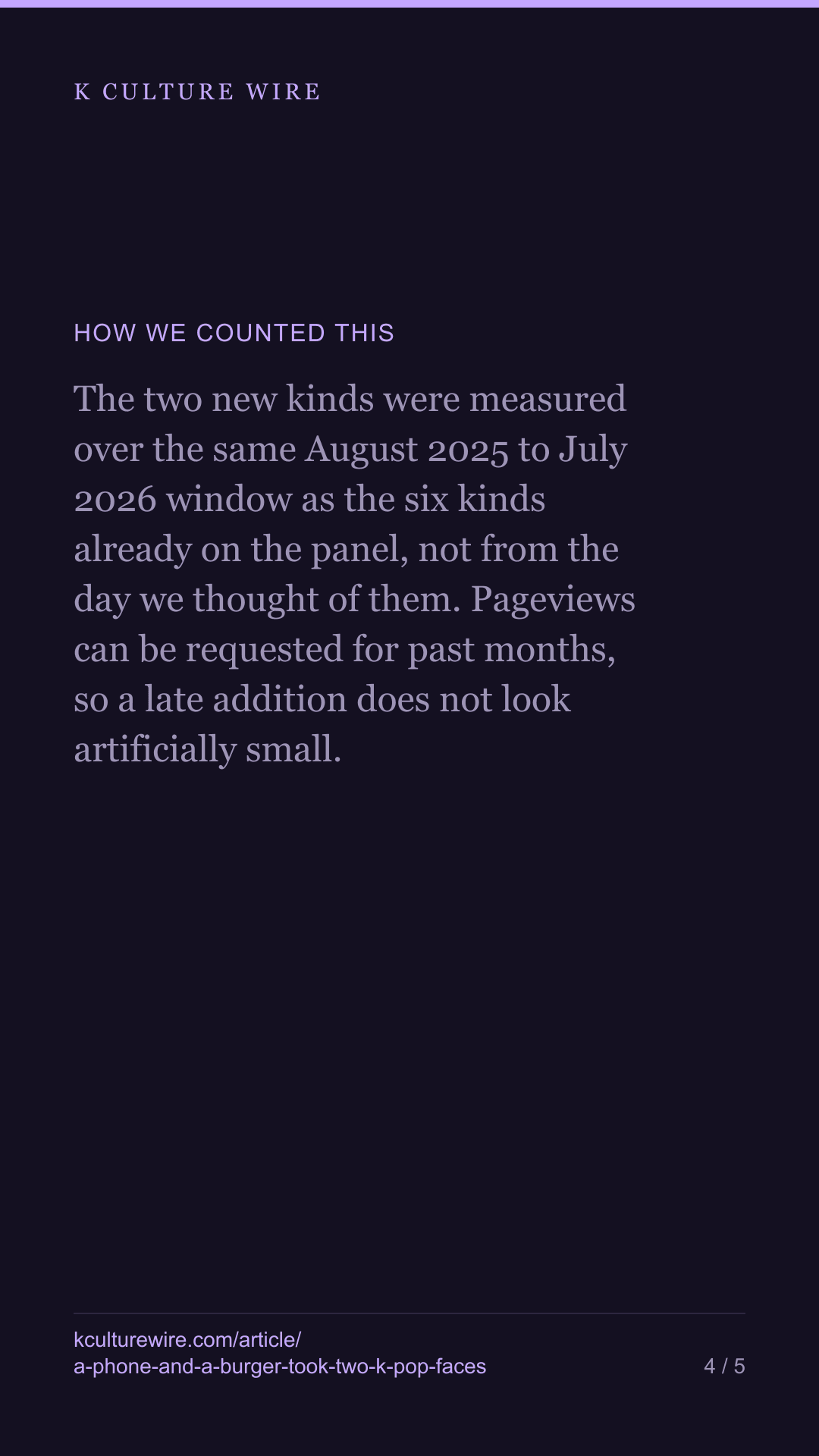
So we added two kinds — technology makers and fast food and coffee chains, four brands each — and re-measured everything over the same twelve months, August 2025 through July 2026. Pageviews can be asked for past months, which matters: a kind added late does not come out looking small because it was added late. It sits on the same window as the rest.
The panel now holds 30 brands across seven kinds.
What the numbers say, and what we nearly said instead
The kind totals came out like this, in reads per million across the four editions:
| Kind | Total | Most-read brand in it |
|---|---|---|
| Technology makers | 1,382.54 | Google — 75.1% of the kind |
| Luxury houses | 264.74 | Gucci — 22.0% |
| Fast food and coffee chains | 183.67 | McDonald’s — 45.8% |
| German car makers | 165.34 | BMW — 40.4% |
| Jewellers and watchmakers | 53.30 | Cartier — 34.4% |
| Everyday fashion labels | 8.75 | Tommy Hilfiger — 100% |
| Korean car makers | 0 | none measurable |
The first line invites a headline: technology is read 5.2 times as much as every luxury house here put together. We were about to publish it.
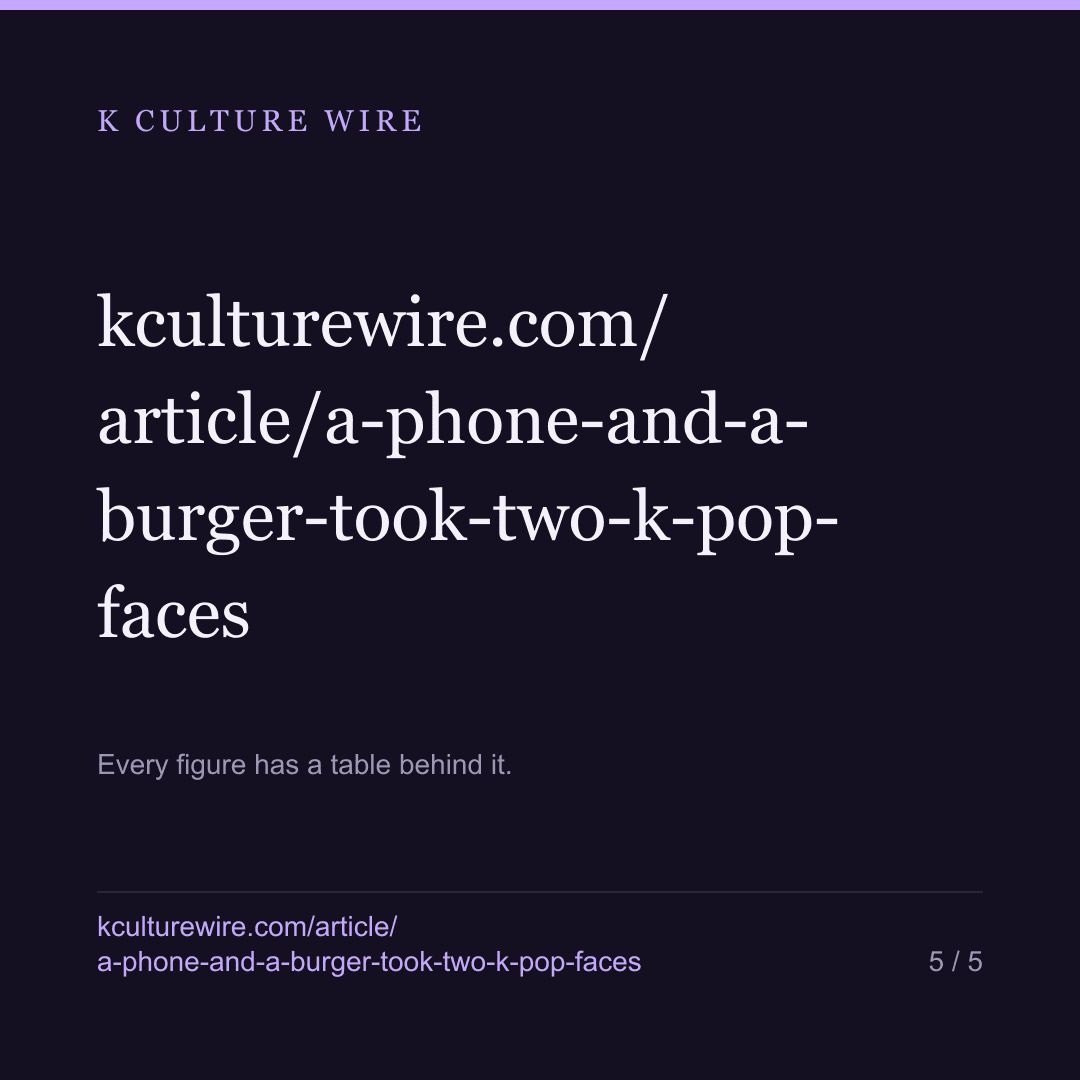
Then we counted inside the kind. Google alone is 1,038.59 of that 1,382.54 — three quarters of it. Nobody makes a search engine the face of a campaign. Take Google out and technology is 1.30 times the luxury houses, not 5.2.
The kind was not overwhelming. One entry was.
So the comparison we publish is brand against brand, which is smaller and survives scrutiny:
- The phone company is read 172.97 per million. The most-read luxury house on this panel, Gucci, is 58.33. That is about three times.
- McDonald’s is 84.19. That is about one and a half times Gucci.
Both of the brands that took a K-pop face this week are read more, in these four countries, than any single luxury house we measure. Not more than the category. More than any one house in it.
Read that carefully
A technology company’s article is read for reasons that have nothing to do with wanting the brand. People look up a phone model, a company, a founder, a court case. A luxury house’s article is read mostly by people interested in the house. Those are not the same curiosity, and this panel cannot separate them.
What the numbers do support is narrower, and still worth knowing: far more people in Indonesia, Vietnam, Thailand and Malaysia end up on the phone company’s page than on any single luxury house’s page. If a face is placed there, more people walk past it.
Reads are not sales. We hold no sales data and are not pretending otherwise.
The country order changes with the kind
This is the part a single ranking destroys. Thailand reads technology and fast food more than the other three do. Malaysia leads on luxury houses. Indonesia leads on German cars. The same four countries change places depending on what kind of brand you ask about — Indonesia sits anywhere from first to fourth across the kinds thick enough to read.
A league table of 30 brands would have given each country one position and hidden all of that.
What we could not measure
Burger King has no article on the Thai edition, so it cannot form a four-edition total and is excluded from the fast-food number — named here rather than quietly dropped.
The same rule is why Korean car makers still read zero. Hyundai, Kia and Genesis are each missing from at least one of the four editions. Three Korean brands, and not one of them clears the bar that Mercedes-Benz, BMW and Porsche all clear. We are not filling that in with an estimate. The zero is a statement about coverage, not about interest, and it is the most uncomfortable number on the panel.
Everyday fashion labels come with a warning too: only one brand in that kind has all four articles, so the kind is one brand wearing a category’s name. The panel marks it thin.
Method, in one paragraph
Brand identity and article links come from Wikidata, whose structured data is released under CC0. Reads come from the Wikimedia Pageviews API, human traffic only, and Wikimedia’s own legal page places its analytics datasets under CC0 as well — we read that page on 10 September 2026 rather than assuming, having previously filed it under a guess. Every figure is per million reads on that edition, and the four denominators are published. A brand enters a kind total only when all four editions carry an article about it.
The full panel, including the country-by-country split and the edition denominators, is at brand kinds.
Where these numbers come from
Sources
- Wikidata — SPARQL — sitelinks for each brand entity to the Indonesian, Vietnamese, Thai and Malay Wikipedias. Structured data on Wikidata is released under CC0; we checked the wording at dumps.wikimedia.org/legal.html on 10 September 2026. · https://query.wikidata.org/sparql
- Wikimedia Foundation — Pageviews API, per-article human traffic for the 12 months from August 2025 through July 2026, on four Wikipedia editions. Analytics datasets are released under CC0 by the same legal page; we read it rather than assuming, having previously recorded it as CC BY-SA by guess. · https://wikimedia.org/api/rest_v1/
- Our own community and social desk archive — Items collected at 08:00 KST on 10 September 2026 — 688 items, of which 217 sat on our K-culture axis. Four separate items concerned one singer becoming the face of a phone camera; one concerned another becoming the face of a burger chain. Used to date the occasion, never as a source of a number.
What we checked
- The two new kinds were measured over the same August 2025 to July 2026 window as the six kinds already on the panel, not from the day we thought of them. Pageviews can be requested for past months, so a late addition does not look artificially small.
- We checked whether one entry was carrying the technology total before publishing a multiple. It was: Google is 75.1% of that kind. We therefore do not compare kind against kind, and compare brand against brand instead.
- Every figure is reads per million reads on that language edition, so a large edition and a small one can sit in the same column. The four edition denominators are published on the panel page.
- A brand is only counted into a kind total when all four editions have an article about it. Brands missing from an edition are named and excluded rather than counted as zero.
What we left out, and why
- Any claim about who chose whom, what either deal is worth, or how long it runs. We hold no contract data and did not look for any.
- Any claim that being read about means being wanted, bought, or trusted. Reads are reads.
- Burger King from the fast-food total: it has no article on the Thai edition, so its four-edition total cannot be formed.
- Hyundai, Kia and Genesis from the Korean-car total for the same reason, which is why that kind still reads zero on the panel.
The data behind this
Written from the same data
Take this away — 10 cards
The figures in this article, as images. Free to repost with the address on them.
If you work in this business
Everything on this page is measured from the same weekly Netflix lists, per market and per title. We publish the pages free; what we sell is the same measurement cut to one company's catalogue — including the figures behind /brand-kinds.
What a company sheet contains, and what it cannot tell you →