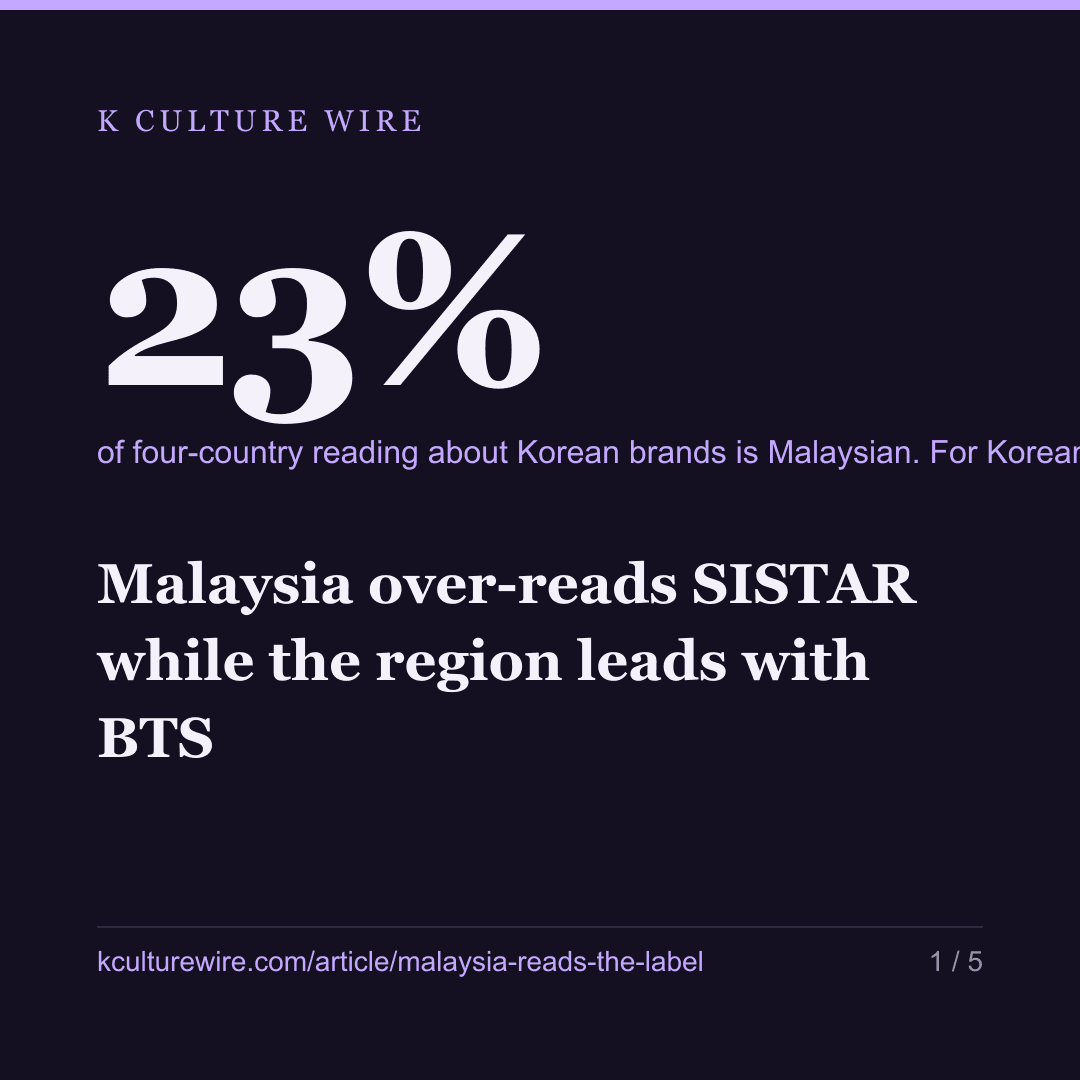
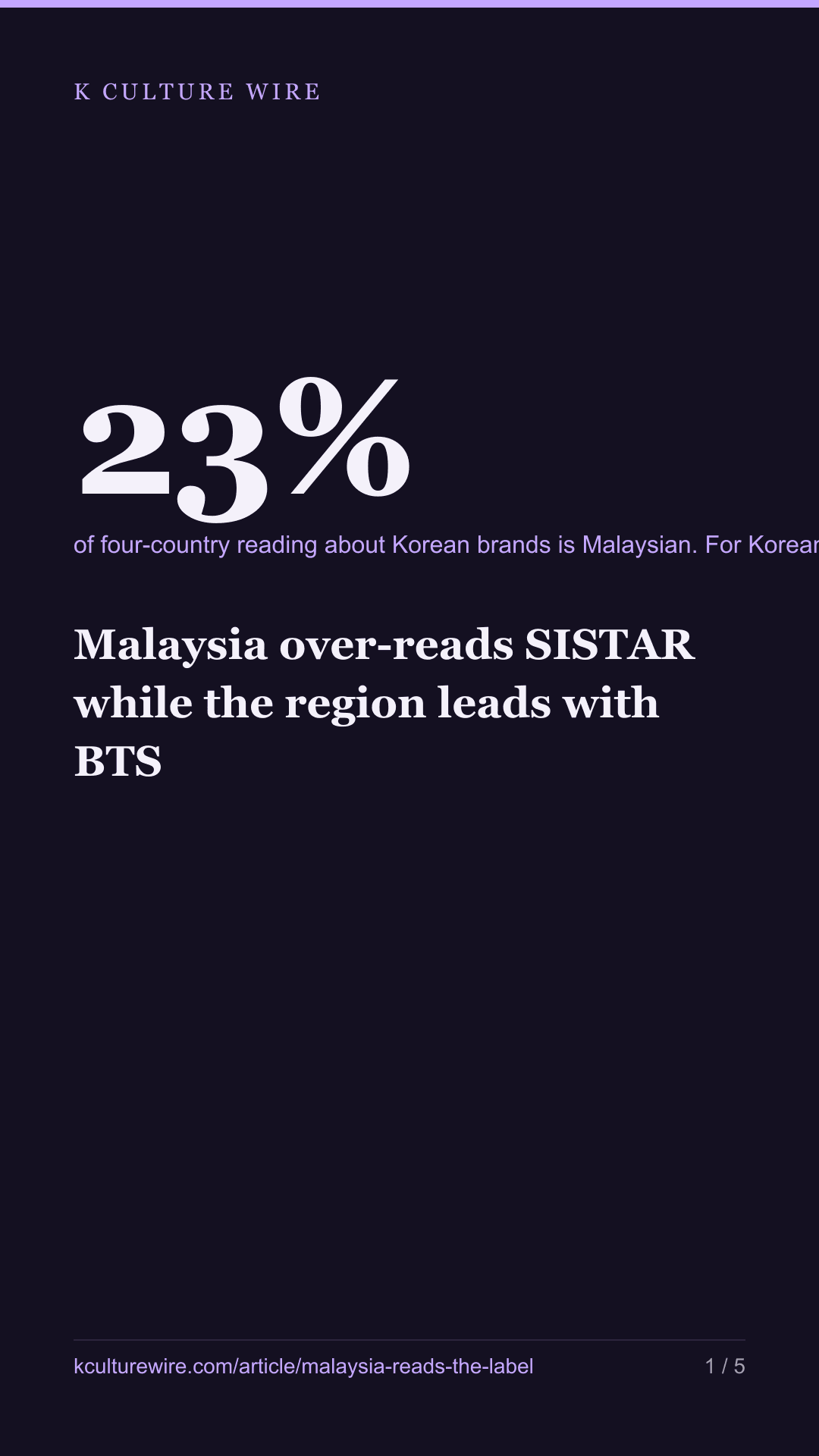
Malaysia over-reads SISTAR while the region leads with BTS
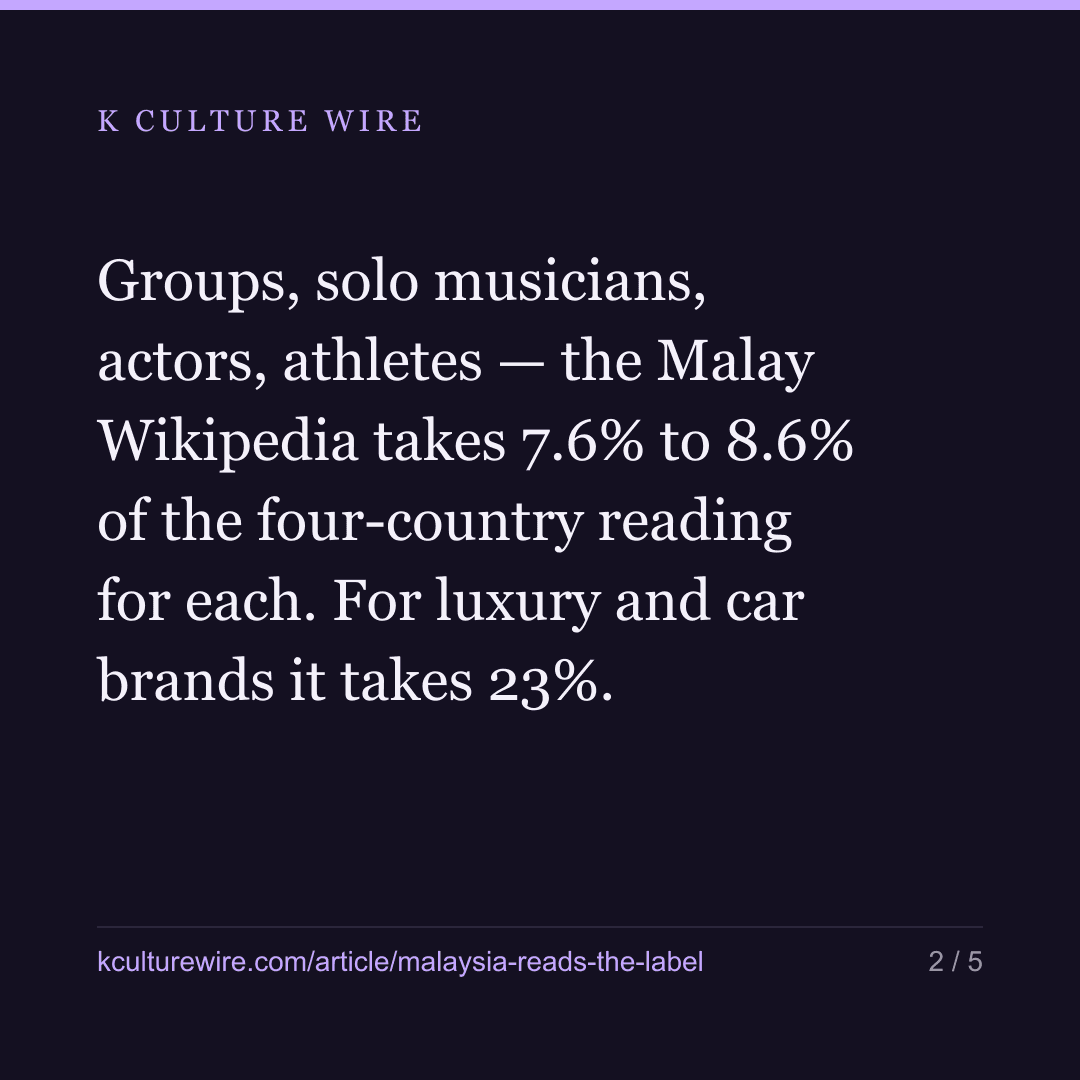
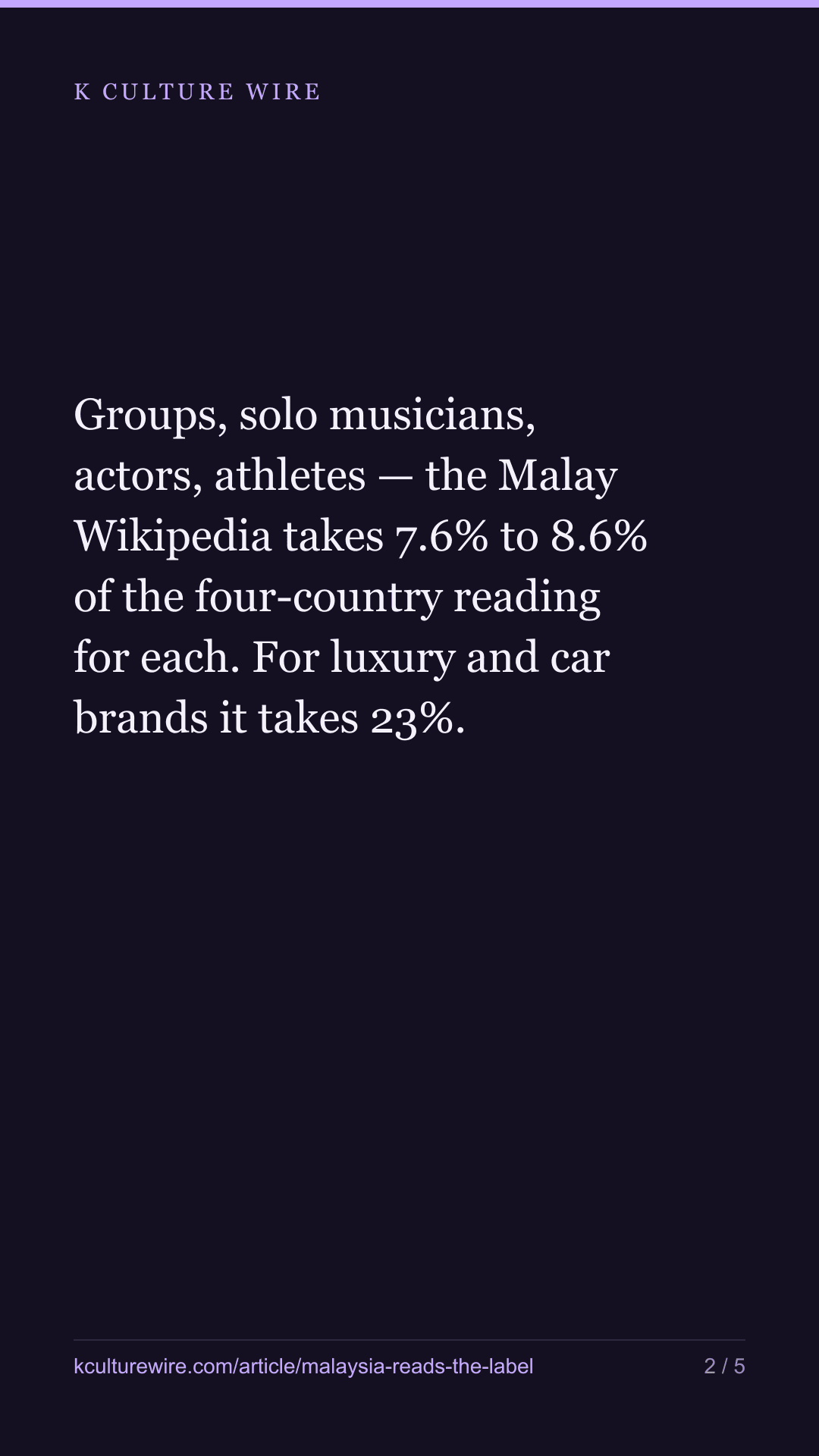
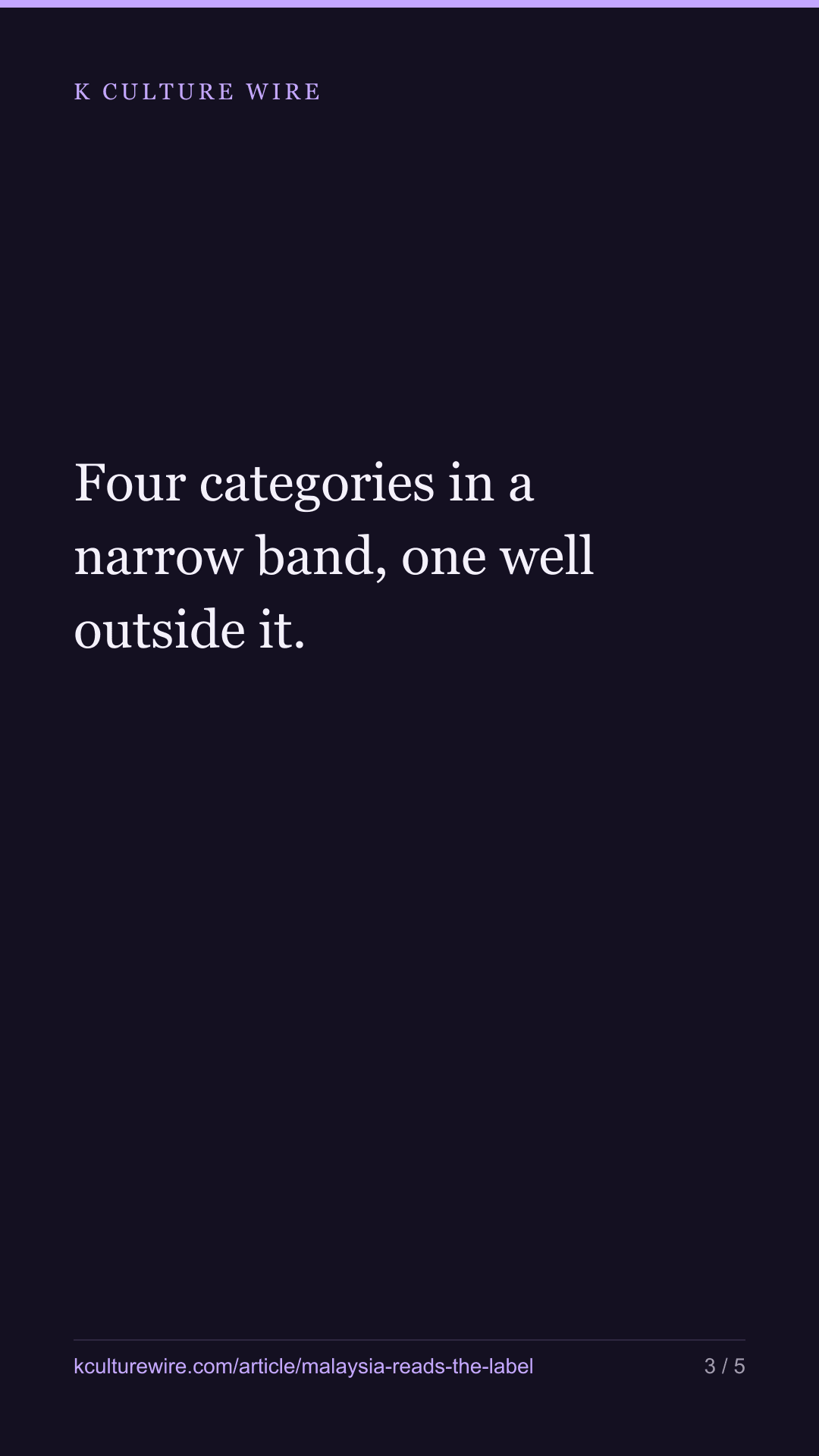
Groups, solo musicians, actors, athletes — the Malay Wikipedia takes 7.6% to 8.6% of the four-country reading for each. For luxury and car brands it takes 23%. Four categories in a narrow band, one well outside it.
The table this is written from: /malaysia
Take everything we have measured across Indonesia, Vietnam, Thailand and Malaysia, and ask a narrow question of each category: what share of the four-country reading happens in the Malay edition?
| Category | Subjects | Malaysia’s share |
|---|---|---|
| Groups and bands | 255 | 8.6% |
| Solo musicians | 1,446 | 8.5% |
| Actors | 1,023 | 7.8% |
| Athletes | 900 | 7.6% |
| Luxury, fashion and car brands | 22 | 23.0% |
Four categories of people sit inside a 1.0-point band. Brands sit at 2.8 times their average.
That is worth stating carefully, because the obvious reading is wrong. This is not “Malaysia is a small market so everything is small there.” Every figure above is already divided by the size of each Wikipedia. Malaysia’s share of people is low. Its share of brands is not.
Which brands
| Brand | Indonesia | Vietnam | Thailand | Malaysia | Malaysia’s share |
|---|---|---|---|---|---|
| Balenciaga | 3.7 | 9.8 | 5.7 | 20.4 | 51.6% |
| Prada | 7.7 | 8.2 | 2.3 | 18.4 | 50.3% |
| Cartier | 1.3 | 2.1 | 6.5 | 8.4 | 45.9% |
| Chanel | 7.5 | 14.0 | 6.2 | 19.0 | 40.7% |
| Gucci | 6.0 | 11.2 | 20.8 | 20.3 | 34.8% |
| Dior | 4.7 | 12.7 | 6.0 | 4.6 | 16.6% |
Balenciaga and Prada are read more in the Malay edition than in the other three combined, on this scale. Dior is the exception in the other direction and sits close to the people band.
Which people
The individuals who lean Malaysian are not the ones near the top of any other table we have built.
| Name | Total | Malaysia’s share |
|---|---|---|
| Lee Joo-yeon | 14.3 | 60.4% |
| SISTAR | 33.7 | 57.6% |
| Ahn So-hee | 37.0 | 56.5% |
| Cho Kyu-hyun | 40.0 | 48.2% |
| Ailee | 12.2 | 41.6% |
| Jihyo | 40.6 | 39.0% |
| Kim Jae-joong | 47.0 | 36.1% |
SISTAR disbanded in 2017. Ahn So-hee left Wonder Girls in 2013. Cho Kyu-hyun and Kim Jae-joong debuted in the mid-2000s. The names Malaysia over-reads relative to its neighbours skew towards an earlier decade of K-pop than the names that lead the region overall — BTS, Babymonster, Go Youn-jung.
We are not going to tell you why. A share is not a reason, and we did not measure when anyone’s audience formed.
What this cannot say
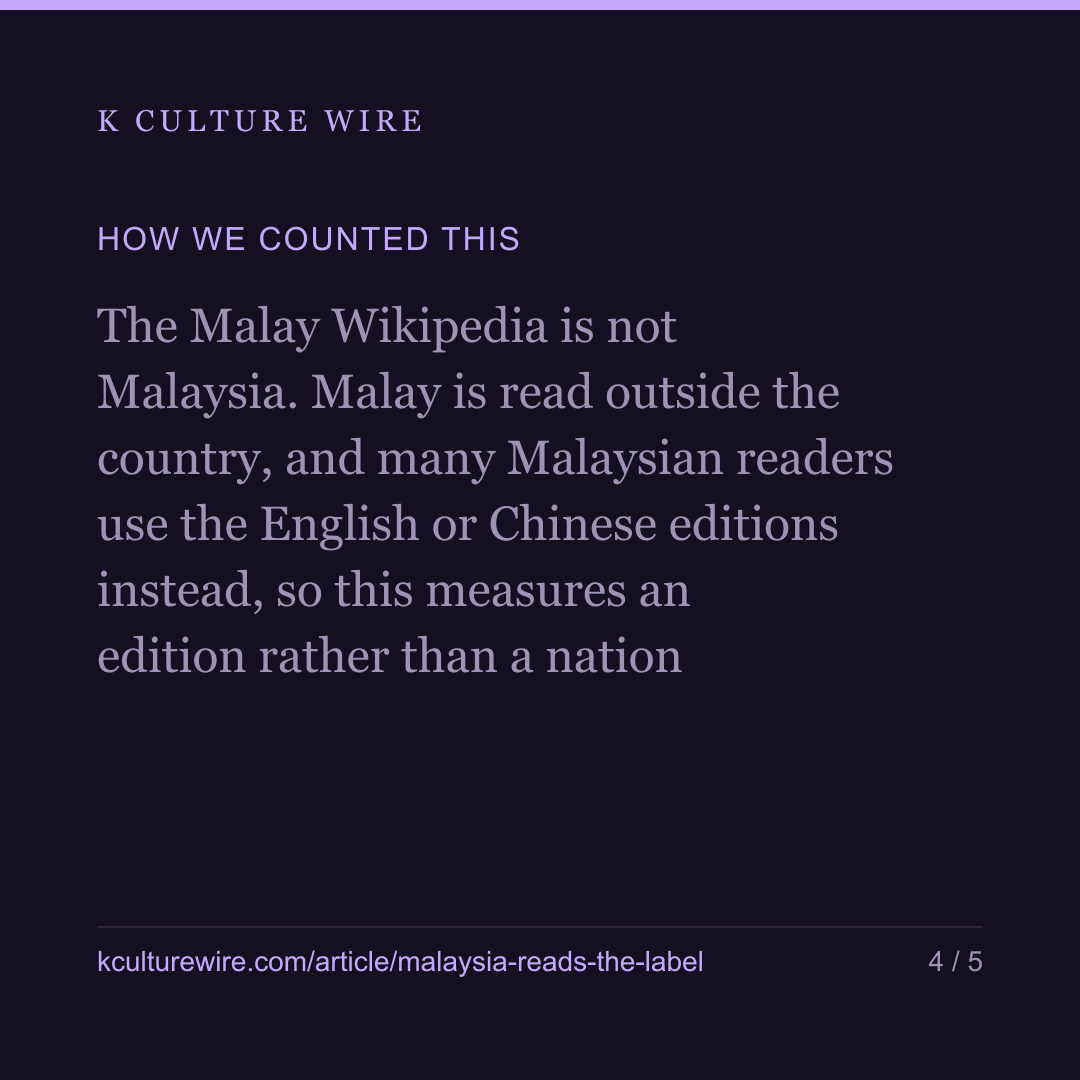
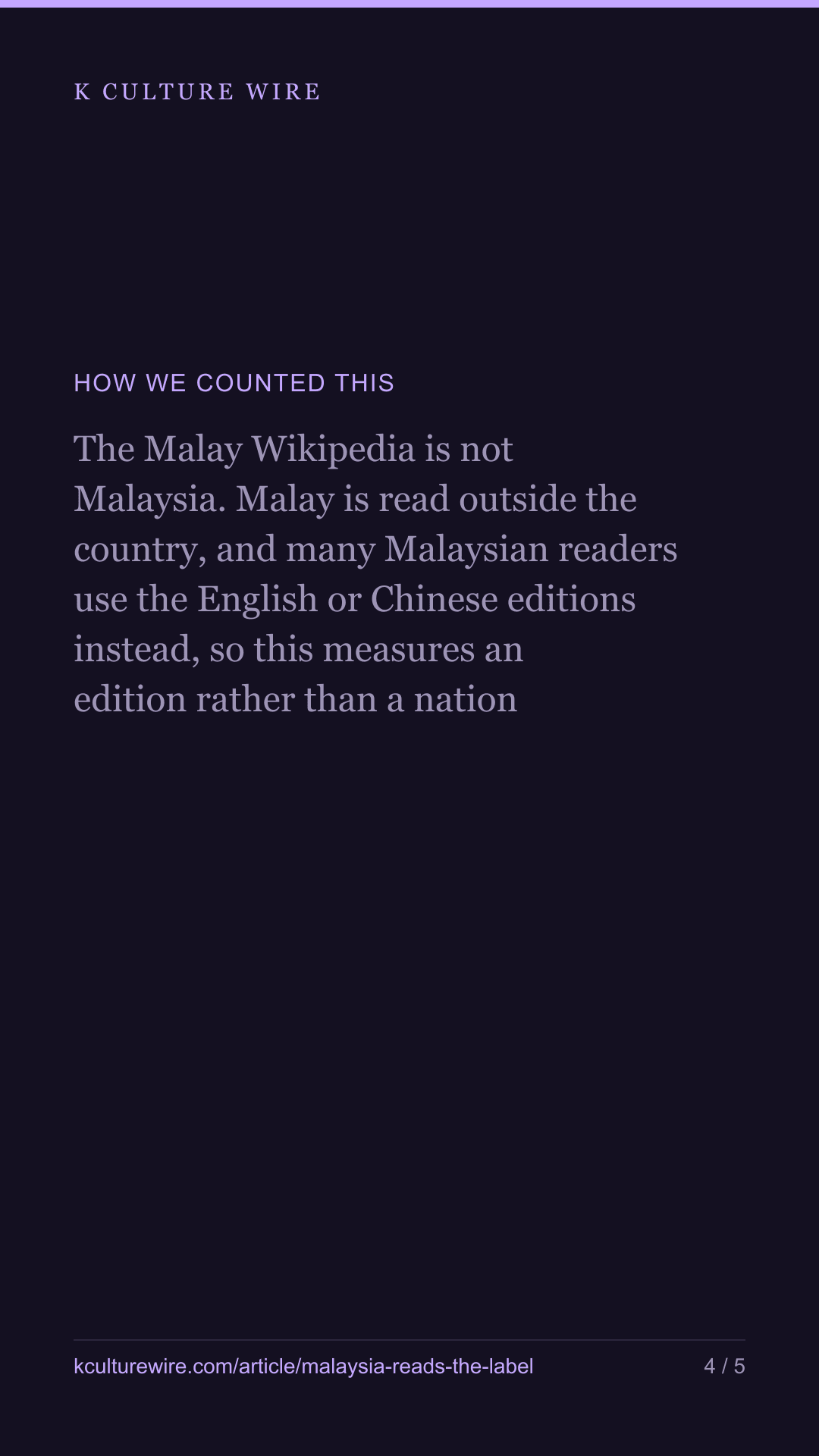
The Malay Wikipedia is not Malaysia. Malay is read outside the country, and many Malaysian readers use the English or Chinese editions instead — the English Wikipedia alone drew 82 billion reads in this window and cannot be split by country. So this measures an edition, not a nation, and every figure is a floor.
Subjects with a four-country total below 3 are left out of the two lists above. At that size one burst of reading turns into a large-looking share.
The brand list is 22 names we chose and resolved to Wikidata items by their English article titles. It is a sample, not a census, and a different 22 would move the 23% figure.
The full tables are at Malaysia reads Korean brands nearly three times as readily.
Where these numbers come from
Sources
- Wikidata — Article links for Korean athletes, singers, groups, actors, and named luxury, fashion and car brands
- Wikimedia — Pageviews API, per-article and per-edition monthly reads, human traffic only, August 2025 to July 2026
What we checked
- The Malay Wikipedia is not Malaysia. Malay is read outside the country, and many Malaysian readers use the English or Chinese editions instead, so this measures an edition rather than a nation
- The English Wikipedia alone drew 82 billion reads in this window and cannot be split by country. Every figure here is a floor, not a measure
- Subjects with a four-country total below 3 are left out of both lists. At that size one burst of reading turns into a large-looking share
- The brand list is 22 names we chose and resolved to Wikidata items by their English article titles. It is a sample, not a census, and a different 22 would move the 23% figure
The data behind this
Written from the same data
Take this away — 10 cards
The figures in this article, as images. Free to repost with the address on them.
If you work in this business
Everything on this page is measured from the same weekly Netflix lists, per market and per title. We publish the pages free; what we sell is the same measurement cut to one company's catalogue — including the figures behind /malaysia and /fame-compare.
What a company sheet contains, and what it cannot tell you →